
Le Hoang Da
Buddhist Scholar
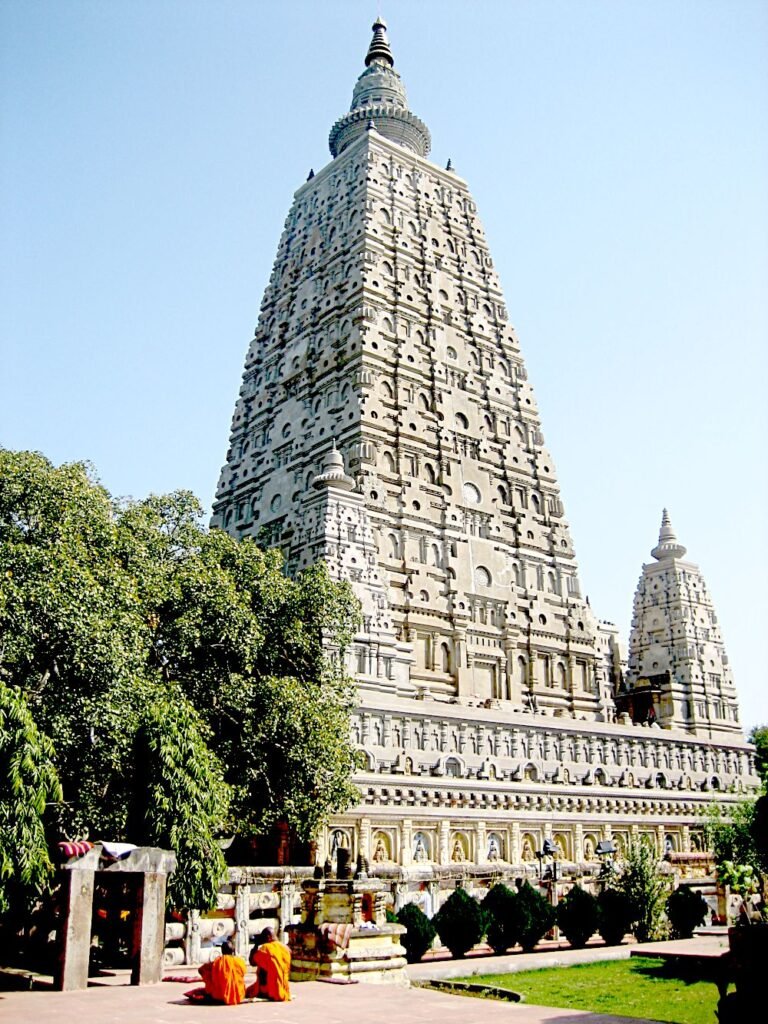
Figure 1: The Mahabodhi Temple at Bodh Gaya, Bihar, India, the sacred site where the Buddha is believed to have attained enlightenment beneath the Bodhi tree. For many centuries the temple complex has served as one of the most important pilgrimage destinations in the Buddhist world. Source: Wikimedia Commons, CC BY-SA.
I. Introduction
In the history of Indian Buddhism, Bodh-Gaya occupies a uniquely significant position. It is the site associated with the central event of the Buddhist tradition: the awakening of the Buddha beneath the Bodhi tree. From the earliest centuries of Buddhist history, this place became one of the most important pilgrimage centers in the Buddhist world, attracting monks and devotees from various regions of Asia. The records of Chinese pilgrims such as Faxian in the fifth century and Xuanzang in the seventh century show that Bodh-Gaya was not merely a sacred site of symbolic importance, but also a religious and intellectual center with wide influence within the international Buddhist network.
However, when the historical narrative moves into the later medieval period, the history of Bodh-Gaya becomes more difficult to reconstruct. During the eleventh and twelfth centuries, many major Buddhist centers in the regions of Bihar and Bengal—including renowned monastic universities—underwent profound transformations. The textual sources for this period are relatively scattered, making it difficult to reconstruct the religious life of the region. In this context, inscriptions become an especially important category of historical evidence. Unlike chronicles or religious legends, which often have a literary character, inscriptions provide direct information about historical figures, construction activities, and patterns of religious patronage at specific locations.
Among the inscriptions connected with Bodh-Gaya, one particularly noteworthy document is the inscription associated with the reign of King Jayacandra of the Gāhaḍavāla dynasty. This inscription was discovered during archaeological surveys at Bodh-Gaya in the nineteenth century by Alexander Cunningham, who conducted some of the earliest systematic studies of Buddhist monuments in northern India. The text was subsequently transmitted to the scholar Rajendralal Mitra, who published a facsimile and the first reading of the inscription in the Proceedings of the Asiatic Society of Bengal in 1880.
Nearly half a century later, the inscription received renewed scholarly attention through the study “A Buddhist Inscription from Bodh-Gaya” by Niradbandhu Sanyal, published in 1929. In this work, Sanyal conducted a new scholarly examination and revision of the text, comparing earlier readings and providing a detailed analysis of the paleographic characteristics of the inscription. Through this effort, the document was placed within a clearer historical framework and offered important insights into the religious life of Bodh-Gaya in the late twelfth century.
In its formal characteristics, the inscription is written in Sanskrit using medieval Nāgarī script and is structured as a prāśasti, a eulogistic composition consisting of seventeen verses. The text records the construction of a religious monument at Jayapura near Bodh-Gaya while praising a Buddhist monk named Śrīmitra, who is described as a spiritual teacher of considerable influence upon the king. In addition, the inscription refers to several religious elements characteristic of later Buddhist traditions, including the veneration of figures such as Avalokiteśvara and Tārā, as well as allusions to the concept of the Ādi-Buddha.
The importance of this inscription lies in the fact that it provides a rare glimpse of Bodh-Gaya in the late twelfth century. The date of the document, generally placed in the 1180s, situates it at a particularly significant moment in the history of the region. Only a few decades later, many of the major Buddhist centers of northern India would undergo profound upheavals, leading to the rapid decline of monastic networks that had existed for centuries. The Jayacandra inscription can therefore be regarded as a historical trace of Bodh-Gaya just before the religious and political landscape of the region entered a new phase.
The purpose of the present article is to examine this inscription as a historical source for understanding Bodh-Gaya in the late twelfth century. Rather than merely presenting the contents of the text, the study seeks to place the inscription within the broader context of the religious and political history of the region. By analyzing the structure of the inscription, the religious elements mentioned in the text, and the historical figures associated with it, the article aims to clarify what this document can reveal about Buddhist life at Bodh-Gaya during the final centuries of the medieval period.
This approach follows a familiar principle in the study of the history of religions: an inscription is not merely a text, but a trace of a particular historical world. Behind the eulogistic verses and rhetorical conventions of the inscription, it is possible to discern signs of an active religious network, relationships between monastic communities and political authority, and forms of religious practice present at one of the most sacred locations in the Buddhist world.
When placed within its appropriate historical context, the Jayacandra inscription thus appears not simply as a ceremonial text of praise. Instead, it becomes a valuable source for reconstructing Bodh-Gaya at a critical moment in the history of Indian Buddhism—a moment just before the profound transformations of the late twelfth century reshaped the religious landscape of the region.
II. The Historical Context of Bodh-Gaya
In order to fully understand the significance of the inscription associated with King Jayacandra, it is first necessary to place the document within the broader historical context of Bodh-Gaya. From a very early period in the history of Buddhism, Bodh-Gaya acquired a uniquely sacred status, for it is the place where the Buddha attained awakening beneath the Bodhi tree. This event transformed what had once been a relatively modest locality in the region of Magadha into a pilgrimage center of enduring importance for Buddhist communities across Asia.
Early textual sources indicate that Bodh-Gaya was revered as a sacred site from the earliest centuries following the emergence of Buddhism. According to Buddhist tradition, the Buddha spent the first weeks after his awakening in the vicinity of the Bodhi tree, and the area gradually came to be regarded as a distinctive religious space. The development of Bodh-Gaya as a pilgrimage center on a large scale, however, likely began during the reign of Emperor Aśoka, the renowned ruler of the Mauryan dynasty in the third century BCE. According to Buddhist tradition as well as certain archaeological evidence, Aśoka sponsored the construction of religious monuments at several locations associated with the life of the Buddha, including Bodh-Gaya. The patronage of the Mauryan court may therefore be seen as the first major turning point in the transformation of Bodh-Gaya into a pilgrimage center of significance beyond its immediate locality.
In the centuries that followed, Bodh-Gaya continued to appear in a variety of historical sources. The records of Chinese pilgrims provide particularly vivid descriptions of the site. When Faxian visited India in the early fifth century, he described Bodh-Gaya as a place deeply venerated by Buddhist communities. Two centuries later, Xuanzang left detailed accounts of the area surrounding the Bodhi tree and the religious structures located there. These descriptions suggest that Bodh-Gaya at that time functioned not only as a pilgrimage destination but also as an active religious center with monasteries, shrines, and resident monastic communities.
From approximately the eighth to the twelfth centuries, Bodh-Gaya lay within the sphere of influence of several important Buddhist dynasties in eastern India. During this period, the Pāla dynasty ruled much of Bihar and Bengal and became known as one of the most significant royal patrons of Buddhism. Under Pāla rule, major monastic institutions such as Nālandā and Vikramaśīla developed into prominent centers of learning that attracted monks and scholars from various parts of Asia. Within this broader intellectual and religious environment, Bodh-Gaya continued to function as a major pilgrimage site while maintaining close connections with the network of great monasteries across the region of Magadha.
By the late twelfth century, however, the historical landscape of the region had become increasingly complex. The power of the Pāla dynasty declined, and large parts of northern India came under the control of new ruling houses. Among the most important of these was the Gāhaḍavāla dynasty, which governed extensive territories around Kanauj and Varanasi. Historical sources often portray the rulers of this dynasty as patrons of Hindu religious traditions, particularly Vaiṣṇavism and Śaivism. Nevertheless, inscriptions and other sources suggest that the religious environment of the region was far more complex than rigid classifications between religious traditions might imply.
It is precisely within this historical context that the inscription associated with Jayacandra becomes especially significant. The document indicates that by the late twelfth century Bodh-Gaya still maintained a notable level of Buddhist activity. The inscription refers not only to monastic figures such as Śrīmitra but also to the construction of new religious structures in the vicinity of Bodh-Gaya. These details suggest that religious life at the site continued to exist even during a period when many other Buddhist centers in northern India were undergoing profound transformations.
Another noteworthy aspect of the inscription is that it reflects the presence of religious elements characteristic of later Buddhist traditions, particularly figures familiar within Tantric Buddhism such as Avalokiteśvara and Tārā. This indicates that by the late twelfth century Bodh-Gaya was not only a place associated with the historical memory of the Buddha’s enlightenment but also a center where forms of Buddhist practice that had developed over many centuries continued to flourish. These elements point to a complex religious environment in which older Buddhist traditions, Tantric practices, and international pilgrimage networks coexisted within the same sacred landscape.
For these reasons, the study of the Jayacandra inscription contributes not only to our understanding of the document itself but also to the broader historical context of Bodh-Gaya in the late twelfth century. When placed within the framework of the political and religious transformations of the region, the inscription becomes a particularly valuable source for reconstructing the life of Buddhism at one of its most sacred sites just before the history of the region entered a new phase.
III. The Jayacandra Inscription and the Structure of the Text
Having placed the inscription within the broader historical context of Bodh-Gaya, the next step is to examine the document itself—its form, structure, and literary characteristics. The inscription associated with King Jayacandra is not a simple administrative record but a prāśasti inscription, that is, a eulogistic composition engraved on stone to commemorate a religious construction and to honor the figures connected with it. Texts of this kind typically combine historical and religious purposes, employing poetic language to celebrate individuals or events recorded in the inscription.
The inscription is written in Sanskrit and engraved in medieval Nāgarī script, a form of writing that precedes the modern Devanagari script. According to the descriptions provided by scholars who have studied the document, the stone slab is relatively small and contains seventeen lines of text. A corner of the slab has been broken, resulting in the loss or partial illegibility of several characters in the final lines. Nevertheless, most of the text can be reconstructed with considerable clarity through the facsimiles and scholarly readings that have been published.
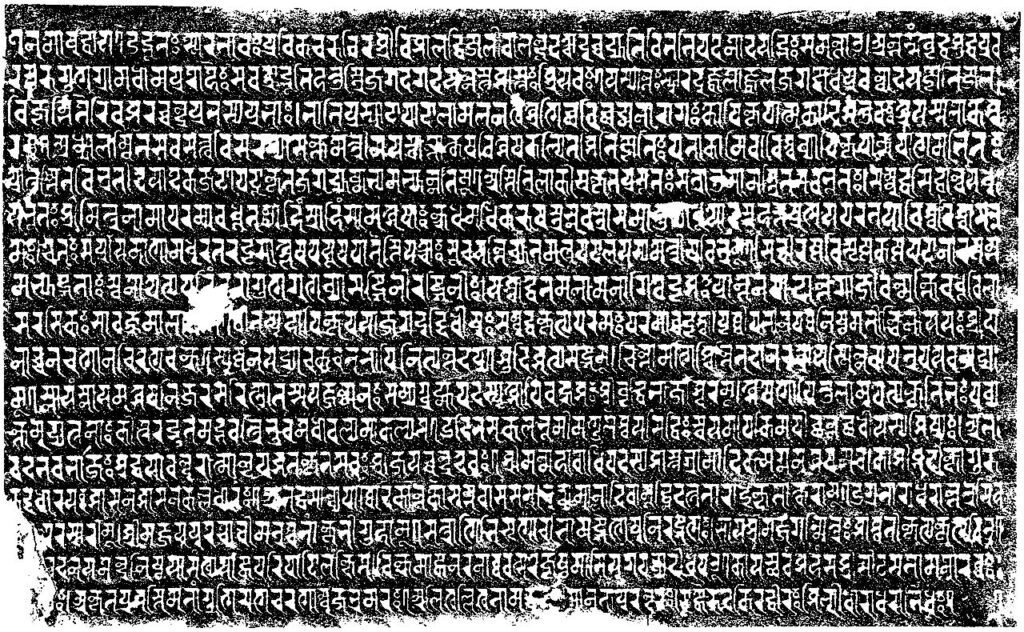
Figure 2. Bodh-Gaya inscription of King Jayacandra, late twelfth century. Source: R. Bandyopadhyay, The Pālas of Bengal (1915), Plate 32; image via Wikimedia Commons (public domain).
One particularly notable feature of the inscription is its Sanskrit poetic structure. The text is not written in prose but consists of seventeen verses composed in several different metrical patterns. Scholars have identified the presence of various chandas (poetic meters) in the inscription, including well-known forms of classical Sanskrit literature such as Śārdūlavikrīḍita, Vasantatilakā, Indravajrā, Anuṣṭubh, and Āryā. The use of multiple meters within a single inscription is characteristic of medieval prāśasti compositions, where authors often sought to display their literary skill and poetic artistry through a diversity of rhythmic structures.
The internal organization of the inscription also reflects the typical pattern of a Buddhist prāśasti. The first three verses are devoted to religious invocations, beginning with the familiar formula “Om namo Buddhāya”—“Homage to the Buddha.” Following this opening, the text continues with praises of several important religious figures, including Ādi-Buddha, Avalokiteśvara, and Ekajaṭā. The appearance of these figures indicates that the inscription reflects a religious milieu strongly influenced by later Buddhist traditions in which elements of both Mahāyāna and Vajrayāna play a prominent role.
After this religious introduction, the subsequent verses turn to the central figure of the inscription: the monk Śrīmitra. The text portrays him as a religious teacher of exceptional virtue, distinguished by compassion and generosity. Several verses employ symbolic imagery characteristic of Sanskrit literary tradition in order to praise his spiritual influence. For instance, the reputation of the monk is described as spreading throughout the three worlds, while his compassion is compared to a stream of nectar capable of purifying the impurities of the world. Such imagery reflects a poetic style deeply shaped by the conventions of kāvya literature, where cosmic metaphors and rhetorical embellishment are frequently used to exalt religious figures.
The verses in the middle section of the inscription are particularly noteworthy because they refer to the relationship between Śrīmitra and secular authority. According to the text, the influence of the monk was so great that even rulers became his disciples. Among them was King Jayacandra, who is portrayed as a renowned monarch yet one who nevertheless honored the monk as his spiritual teacher. This detail not only serves a eulogistic purpose but also provides an important clue regarding the relationship between Buddhist monastic communities and secular dynasties in the late twelfth century.
The latter part of the inscription turns to the description of the religious monument that the text commemorates. According to the final verses, Śrīmitra constructed a large cave at Jayapura near Bodh-Gaya. Within this complex were installed several religious images, including Avalokiteśvara in the form of Siṃhanāda as well as shrines dedicated to different manifestations of Tārā, including Ugratārā and Dattatārā. The presence of these figures is significant not only as symbolic elements but also as evidence for the existence of Buddhist practices with strong Tantric characteristics in the Bodh-Gaya region during this period.
The concluding verses of the inscription function as a kind of colophon, providing specific information about the composition and engraving of the text. The inscription records the names of the author of the prāśasti, the scribe who prepared the text, and the artisan who carved the stone. Such details are relatively rare in many inscriptions and therefore possess particular value for scholars of epigraphy. In addition, the inscription records its date through a chronogram, a system in which numbers are represented through symbolic words. On the basis of these details, scholars have determined that the inscription was engraved around the 1180s according to the Vikrama Saṃvat calendar.
Taken as a whole, the structure of the Jayacandra inscription reflects the essential features of a medieval Buddhist prāśasti. The text begins with divine invocations, continues with praise of the central figure, and concludes with the commemoration of a religious construction along with details concerning the composition and engraving of the inscription. This structure allows the document to function simultaneously as a ritual religious text and as a valuable historical source. When read within the context of Bodh-Gaya in the late twelfth century, the inscription reveals not only the poetic artistry of medieval Sanskrit literature but also concrete indications of religious life and networks of patronage at one of the most sacred sites of the Buddhist world.
IV. Religious Elements in the Inscription
One of the most notable aspects of the inscription associated with King Jayacandra is the system of religious symbolism presented in its opening verses. The text does not merely record the construction of a religious monument or praise a particular monastic figure; it also reflects a fairly clear picture of the theological world of Buddhism at Bodh-Gaya in the late twelfth century. The religious figures mentioned in the inscription indicate that the religious life of the region at that time was not based solely on the memory of the historical Buddha but also incorporated a rich symbolic system drawn from the traditions of Mahāyāna and Vajrayāna Buddhism.
1. Ādi-Buddha and the Cosmology of Later Buddhism
The inscription opens with praise of the Ādi-Buddha, a concept characteristic of later Buddhist traditions, particularly Vajrayāna. In many Tantric Buddhist systems of thought, the Ādi-Buddha is understood as a primordial principle—the source of enlightened wisdom from which other Buddhas emerge. This figure reflects a religious cosmology in which the universe itself is interpreted as the manifestation of primordial awakened wisdom.
The presence of the Ādi-Buddha in the inscription suggests that the religious environment of Bodh-Gaya in the late twelfth century was no longer limited to earlier forms of Buddhist practice but had been shaped by intellectual developments that had unfolded over many centuries. In the Buddhist traditions of Bihar and Bengal during the Pāla period, ideas related to the Ādi-Buddha and similar cosmological frameworks had become increasingly prominent, particularly within monastic settings where Tantric traditions were studied and practiced.
2. Avalokiteśvara and the Ideal of Compassion
Following the praise of the Ādi-Buddha, the inscription continues with a eulogy of Avalokiteśvara, the Bodhisattva who embodies compassion within the Mahāyāna tradition. The presence of Avalokiteśvara in the inscription is not surprising, for by this time he had become one of the most widely revered religious figures across the Buddhist world.
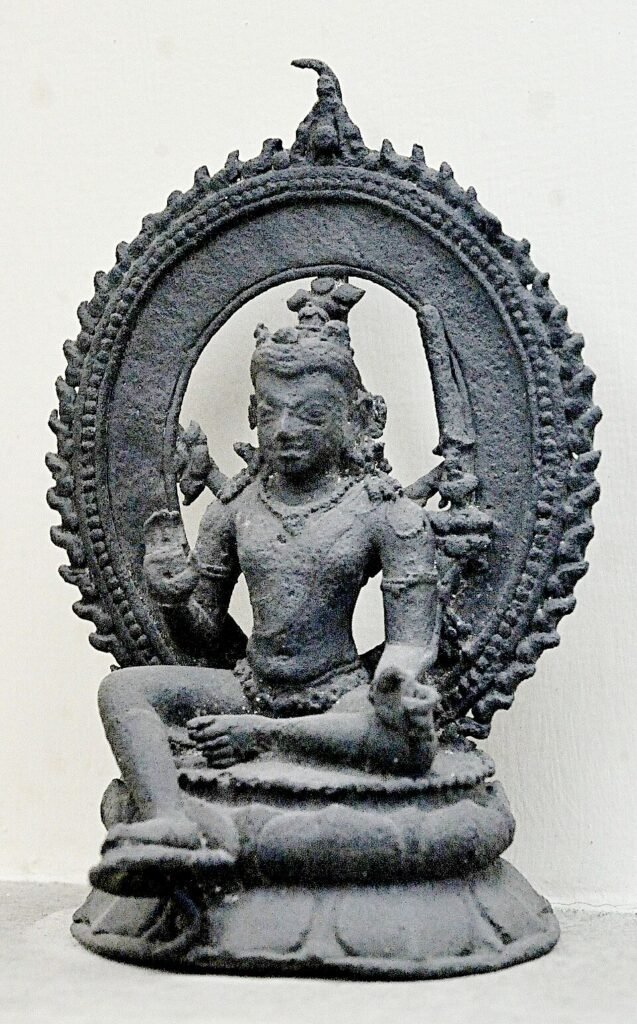
Figure 3: Bronze image of the Bodhisattva Avalokiteśvara from Nalanda, Bihar, dating to the Pāla period (c. 8th–12th century CE). Sculptures of Avalokiteśvara from eastern India reflect the flourishing of Mahāyāna and Vajrayāna devotional traditions in the great monastic centers of Bihar and Bengal during the medieval period. Source: Wikimedia Commons; sculpture from Nalanda, Bihar, now preserved in the Indian Museum, Kolkata.
In the text, Avalokiteśvara is described through poetic imagery that emphasizes his boundless compassion. Such imagery corresponds closely to the theological role attributed to the Bodhisattva in many Mahāyāna scriptures, where he is portrayed as the one who hears the cries of suffering beings and manifests in various forms in order to rescue them. In certain traditions, Avalokiteśvara is also regarded as an intermediary figure between the realm of the Buddhas and the world of sentient beings, serving as a protector of the present cosmic age.
The presence of Avalokiteśvara in the inscription further indicates that Bodh-Gaya in the late twelfth century remained integrated within the broader religious networks of Mahāyāna Buddhism, where Bodhisattva figures played a central role in devotional life.
3. Tārā and Vajrayāna Elements
Alongside Avalokiteśvara, the inscription also refers to female deities such as Tārā and Ekajaṭā. In many Vajrayāna traditions, Tārā is regarded as a savior figure who protects practitioners from the dangers of the world. The various forms of Tārā mentioned in the inscription—including Ugratārā and Dattatārā—suggest that the symbolic system of Tantric Buddhism was present at Bodh-Gaya during this period.
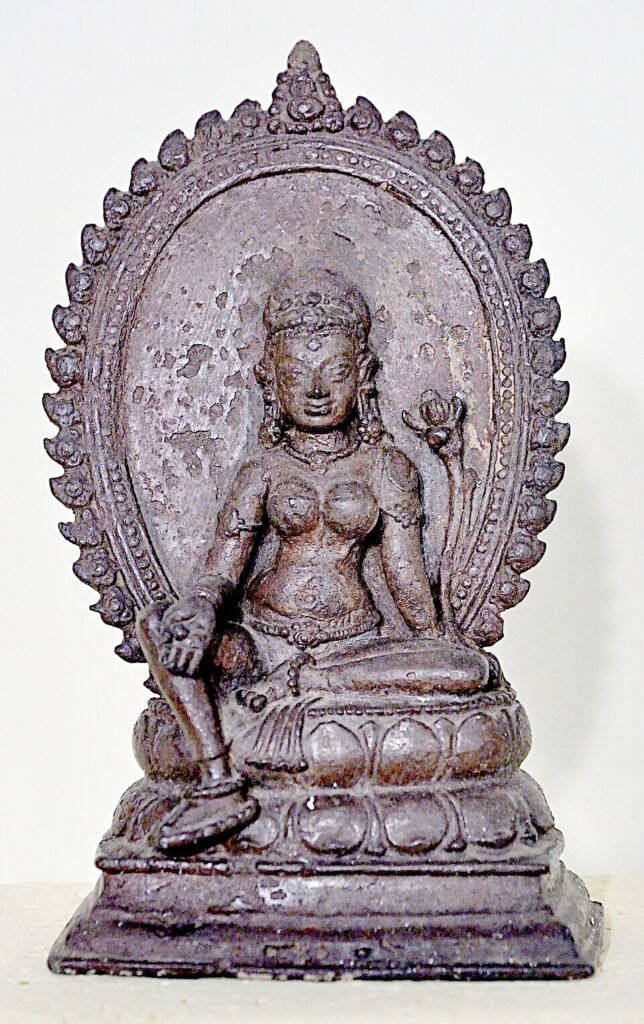
Figure 4: Bronze image of the Buddhist goddess Tārā from Nalanda, Bihar, dating to the Pāla period (c. 9th–10th century CE). Sculptures of Tārā from eastern India reflect the prominence of Mahāyāna and Vajrayāna devotional traditions that flourished in the monastic centers of Bihar and Bengal during the Pāla era. Source: Wikimedia Commons; sculpture from Nalanda, Bihar, now in the Indian Museum, Kolkata.
The appearance of these figures in an inscription connected with the construction of a religious cave suggests that this site functioned not only as a traditional pilgrimage destination but also as a space for the performance of Vajrayāna rituals and symbolic practices. In the Buddhist centers of medieval Bihar and Bengal, such practices were often associated with major monastic institutions and highly educated monastic communities.
4. A Complete Religious Symbolic System
When considered together, the religious figures appearing in the inscription—Ādi-Buddha, Avalokiteśvara, and the various forms of Tārā—form a symbolic system that reflects the theological world of later Buddhism. This system integrates elements of both Mahāyāna and Vajrayāna traditions, in which Bodhisattvas and Tantric deities play important roles in protecting and guiding sentient beings.
Significantly, the inscription does not simply list these figures as decorative elements. They appear prominently at the beginning of the text in verses of praise, indicating that this symbolic framework formed a fundamental part of the worldview of the author who composed the inscription.
5. Bodh-Gaya as a Multi-Layered Religious Space
The religious elements contained in the inscription also suggest that Bodh-Gaya in the late twelfth century functioned as a multi-layered religious space. At one level, the site continued to be revered as the place associated with the historical Buddha’s awakening. At another level, however, Bodh-Gaya also served as a center in which later forms of Buddhist practice and symbolism had developed and become integrated into local religious life.
This combination of ancient tradition and later doctrinal developments created the rich religious landscape reflected in the Jayacandra inscription. When viewed within the broader context of the history of Buddhism in eastern India, the inscription suggests that Bodh-Gaya in the late twelfth century remained a dynamic religious center where multiple currents of Buddhist thought coexisted and interacted.
6. The Relationship between Avalokiteśvara and Tārā in Vajrayāna Tradition
A particularly interesting detail in the inscription is the appearance of both Avalokiteśvara and Tārā within the same symbolic system. In many Mahāyāna and Vajrayāna traditions, these two figures share a special theological relationship. According to later scriptures and traditions, Tārā is often understood as a manifestation of the compassion of Avalokiteśvara. A well-known legend recounts that Tārā emerged from the tears of Avalokiteśvara when he witnessed the suffering of sentient beings in the world.
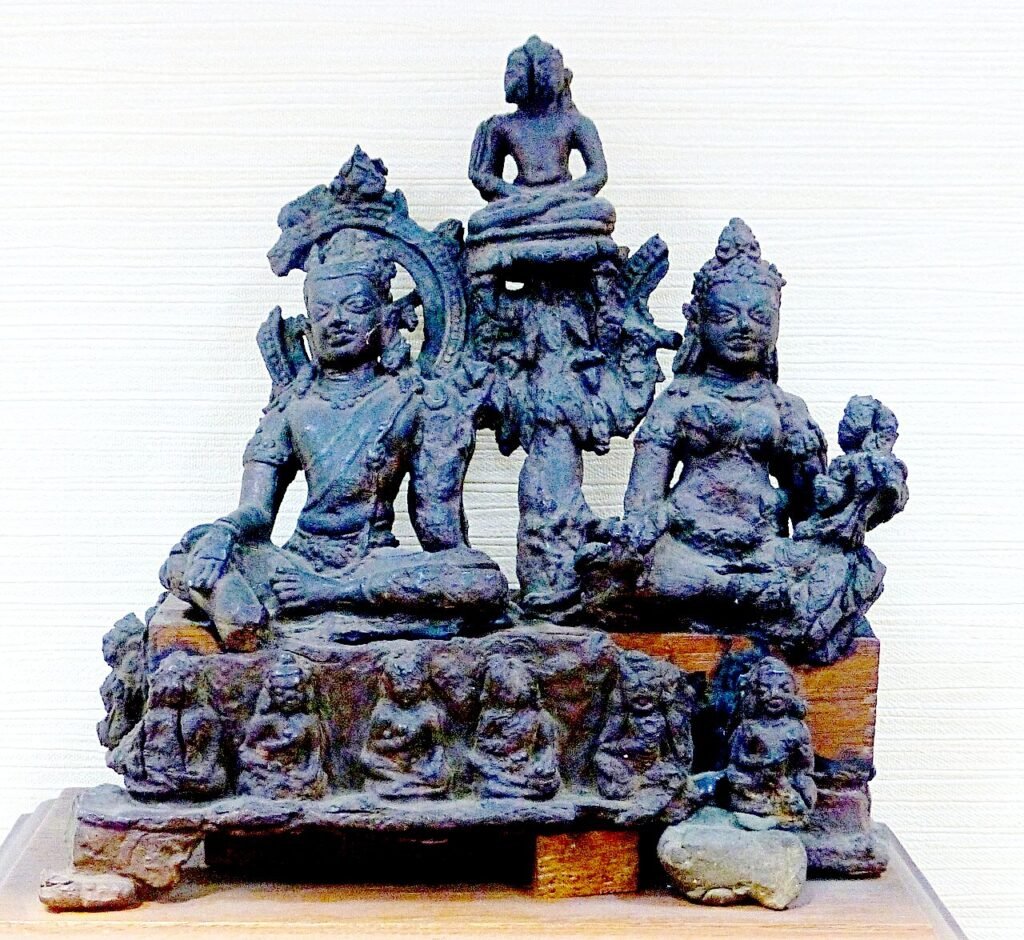
Figure 5: Stone triad depicting the Buddha flanked by Avalokiteśvara and Tārā, discovered at Nalanda, Bihar, and dating to the Pāla period. Such triadic compositions illustrate the close theological relationship between Avalokiteśvara and Tārā within Mahāyāna and Vajrayāna traditions of eastern Indian Buddhism. Source: Wikimedia Commons, photograph of a sculpture from Nalanda, Bihar.
Within the symbolic framework of Vajrayāna, Avalokiteśvara is frequently regarded as the universal principle of compassion, while Tārā represents the dynamic expression of that compassion—a salvific force capable of intervening directly in the dangers faced by human beings. For this reason, in many Tantric systems of practice Avalokiteśvara and Tārā appear together as complementary figures within a shared network of religious symbolism.
This combination was especially common in the art and literature of Buddhist traditions in Bihar and Bengal during the Pāla period. Sculptures, paintings, and ritual texts from this region frequently place Avalokiteśvara and Tārā within the same symbolic framework, reflecting a theological system in which compassion and salvific power are expressed through multiple forms.
Seen in this context, the appearance of both Avalokiteśvara and various forms of Tārā in the Jayacandra inscription is not accidental. Rather, it reflects a specific religious world characteristic of eastern Indian Buddhism in the late twelfth century, in which Mahāyāna and Vajrayāna figures had become familiar elements of religious life. The simultaneous presence of these two figures in the inscription therefore provides additional evidence that Bodh-Gaya at that time remained embedded within the symbolic and ritual networks of Vajrayāna Buddhism that were flourishing in the region.
V. Śrīmitra and the Restoration of Mahābodhi
After presenting the religious elements reflected in the opening portion of the inscription, the text turns to the central figure of the narrative: the monk Śrīmitra. Within the structure of the inscription, Śrīmitra is not introduced merely as a revered religious individual but is portrayed as a figure who played a significant role in the religious life of Bodh-Gaya in the late twelfth century. Through the verses praising him, the inscription suggests that this monk was regarded as someone who contributed substantially to the maintenance and restoration of Buddhist activities in the Mahābodhi region.
1. The Image of a Religious Teacher
In the inscription, Śrīmitra is described through imagery commonly found in Sanskrit literature that celebrates religious figures. The text emphasizes his virtues, particularly compassion and generosity. These qualities are expressed through cosmic metaphors—for example, by comparing his influence to light dispelling the darkness of ignorance, or likening his compassion to a stream of nectar that brings peace and purification to the world.
Such imagery reflects a familiar pattern in Buddhist prāśasti literature, where monks are portrayed not only as individuals devoted to spiritual practice but also as figures whose influence extends widely within the community. In the portrayal offered by the inscription, Śrīmitra appears as a guru—a spiritual teacher capable of guiding both monastic communities and individuals connected with secular authority.
2. Śrīmitra’s Role at Bodh-Gaya
One of the most significant aspects of the inscription is its description of Śrīmitra’s role in restoring monastic life at Mahābodhi. The text suggests that at the time the monastic traditions of the region had experienced periods of decline, and Śrīmitra was regarded as a figure who helped reestablish discipline and communal life among the monks.
These details become particularly meaningful when viewed in the broader historical context of the late twelfth century. As discussed in earlier sections, many major Buddhist centers in the regions of Bihar and Bengal were undergoing significant transformations during this period. Within such circumstances, the praise of a monk for restoring monastic discipline suggests that Buddhist communities at Bodh-Gaya were still actively striving to maintain their religious traditions.
3. Relationship with Secular Authority
Another noteworthy element of the inscription is the relationship between Śrīmitra and secular rulers. The text states that even kings respected him as a spiritual teacher. Among these rulers was King Jayacandra, who is described as having a particularly close relationship with Śrīmitra.
The relationship between monks and political authority was not unusual in the history of Indian Buddhism. From the Mauryan period through the Pāla dynasty, many rulers supported Buddhist monasteries and centers of learning. In the context of the late twelfth century, however, this detail carries particular significance, for it indicates that Buddhist communities were still able to maintain connections with political centers of power even at a time when many traditional monastic networks were beginning to weaken.
4. The Religious Monument at Jayapura
The latter part of the inscription concerning Śrīmitra describes the construction of a religious monument at Jayapura near Bodh-Gaya. According to the text, a large cave was constructed there, within which were installed important religious images associated with the Vajrayāna tradition. These included Avalokiteśvara in the form of Siṃhanāda as well as shrines dedicated to various manifestations of Tārā.
The construction of such a monument is significant not merely as an architectural undertaking but also as evidence for the continued presence of religious activities in the Bodh-Gaya region. Structures of this kind typically functioned as sacred spaces for meditation, ritual practice, and devotional activities. The inscription therefore records not simply an isolated act of construction but reflects the existence of an active religious environment.
5. Śrīmitra in the Historical Landscape of Bodh-Gaya
When the inscription is considered as a whole, it becomes clear that Śrīmitra occupies the central role in the narrative the text seeks to convey. Through its praise of him, the inscription not only honors an individual but also reflects a particular moment in the history of Bodh-Gaya when Buddhist communities were still striving to maintain and reaffirm their presence.
From a historical perspective, the figure of Śrīmitra allows us to see that Bodh-Gaya in the late twelfth century was not a religious center that had already fallen into decline. Rather, it remained a space in which monks, religious monuments, and networks of patronage continued to exist. For this reason, the Jayacandra inscription should not be understood merely as a ceremonial text of praise but also as an important piece of evidence demonstrating the efforts of Buddhist communities to sustain their traditions at one of the most sacred sites of Buddhism.
VI. Jayacandra and the Patronage of Secular Authority
In many Buddhist inscriptions from medieval India, the appearance of kings or members of the ruling elite often plays an important role in establishing the historical context of the document. The inscription associated with Bodh-Gaya in the late twelfth century is no exception. One of the most noteworthy details of the text is the mention of Jayacandra, a king of the Gāhaḍavāla dynasty, as a figure directly connected with the monk Śrīmitra.
1. Jayacandra in the Historical Context of Northern India
Jayacandra was one of the most prominent rulers of the Gāhaḍavāla dynasty, a royal house that controlled much of northern India during the late twelfth century. The political center of this dynasty lay in the regions of Kanauj and Varanasi, two cities of considerable importance in the political and religious life of medieval northern India. Inscriptions and other historical sources indicate that the Gāhaḍavāla rulers played a significant role in supporting the religious institutions of the region, particularly temples and religious establishments associated with Hindu traditions.
In many historical studies, the Gāhaḍavāla kings are described primarily as patrons of Vaiṣṇava and Śaiva traditions. However, inscriptional evidence suggests that the religious reality of the period was far more complex. Medieval rulers frequently maintained relationships with multiple religious communities, not only because of personal belief but also for political and social reasons. In this context, the appearance of Jayacandra in a Buddhist inscription does not necessarily imply that he was himself a Buddhist. Rather, it indicates that he maintained certain connections with Buddhist monastic communities in the region.
2. The Relationship between Jayacandra and Śrīmitra
Within the inscription, Jayacandra is portrayed as a ruler who respected the monk Śrīmitra and regarded him as a spiritual teacher. While such language clearly reflects the conventions of eulogistic literature, it nevertheless provides an important clue regarding the relationship between religious communities and secular authority. The depiction of a king as a disciple of a monk suggests that religious figures such as Śrīmitra could occupy an influential position within the social world of the period.
In the history of Indian Buddhism, relationships between monastic communities and rulers were often reciprocal. Kings offered patronage to monasteries by granting land, funding religious constructions, or supporting the activities of monastic institutions. In return, monastic communities could function as centers of learning, cultural influence, and even as sources of religious legitimacy for political authority. In many cases, inscriptions praise rulers as protectors and supporters of religious traditions, thereby reinforcing their social and political standing.
3. Religious Patronage in the Medieval Context
To understand the significance of this detail more fully, it must be placed within the broader system of religious patronage in medieval India. For many centuries, religious centers such as monasteries, temples, and pilgrimage sites depended on the support of rulers or wealthy patrons within society. Such patronage could take many forms, including the granting of land, the construction of religious monuments, or the funding of rituals and monastic activities.
The Jayacandra inscription reflects precisely this pattern. Although the text does not provide specific details concerning the forms of royal patronage involved, the very presence of the king’s name in the inscription suggests that the existence of religious constructions at Bodh-Gaya was connected with the networks of power and patronage characteristic of the period. This interpretation is consistent with what is known from other medieval Indian inscriptions, where religious building activities were often closely tied to the support of ruling elites.
4. A Complex Religious Landscape
The appearance of Jayacandra in a Buddhist inscription also suggests that the religious life of northern India in the late twelfth century cannot be understood through rigid boundaries between different religious traditions. In reality, Buddhist, Brahmanical, and other religious communities frequently coexisted within the same social and political space. Rulers could support multiple traditions simultaneously, and sacred sites such as Bodh-Gaya often attracted the attention of diverse religious groups.
For this reason, the Jayacandra inscription allows us to glimpse a more complex historical picture than the simplified narrative that often describes the decline of Buddhism in India. Rather than reflecting a moment of complete collapse, the inscription suggests that Buddhist communities continued to maintain relationships with secular authority and remained active at sacred sites such as Bodh-Gaya.
5. The Historical Significance of This Detail
When viewed within the overall structure of the inscription, the appearance of Jayacandra helps clarify the historical context of the document. It allows the inscription to be connected with a specific historical figure, thereby assisting scholars in determining its approximate date and situating it within a particular phase of northern Indian history.
More importantly, this detail indicates that Bodh-Gaya in the late twelfth century still remained integrated within networks linking religious communities and political centers of power. The existence of such relationships helped sacred sites like Bodh-Gaya maintain their religious significance, even during a period when many other Buddhist centers were facing profound historical transformations.
VII. Bodh-Gaya at the End of an Era
When the inscription associated with King Jayacandra is placed within the broader historical context of northern India, it appears as more than merely a eulogistic text or a record of the construction of a religious monument. The date of the inscription—generally placed in the 1180s—situates it at a particularly significant moment in the history of the region. It belongs to a period just before many major Buddhist centers of eastern India underwent profound transformations that fundamentally altered the religious landscape of Magadha and Bengal.
1. Bodh-Gaya in a Transitional Period
For many centuries prior to this period, the regions of Bihar and Bengal had been among the most important centers of Buddhism in India. Great monasteries such as Nālandā, Vikramaśīla, Odantapurī, and Somapura developed into influential intellectual institutions that attracted monks and scholars from many parts of Asia. Within this network, Bodh-Gaya occupied a unique position. It was not a major academic institution in the same sense as the great monastic universities, yet it was the most sacred site of the Buddhist tradition, inseparably associated with the awakening of the Buddha.
By the late twelfth century, however, the political and religious structure of the region began to change rapidly. The decline of dynasties that had long supported Buddhism, together with major political upheavals, weakened the monastic networks that had existed for centuries. Within this shifting environment, many of the great Buddhist centers of eastern India gradually lost their central role in the religious life of the region.
2. The Inscription as a “Historical Snapshot”
It is precisely within this transitional context that the inscription of Jayacandra becomes particularly significant. The text suggests that in the late twelfth century Bodh-Gaya still remained a site with a notable level of Buddhist activity. The details recorded in the inscription—the construction of a religious cave, the presence of Vajrayāna figures, and the role of monks such as Śrīmitra—indicate that the site continued to function as a vibrant religious space.
This point is especially important because many historical narratives portray the decline of Buddhism in northern India as a rapid and almost sudden process. The Jayacandra inscription, however, presents a more complex picture: even in the closing decades of the twelfth century, Buddhist communities continued to remain active, constructing religious monuments and maintaining networks of patronage.
3. A Religious Center Still in Operation
The details preserved in the inscription allow us to imagine Bodh-Gaya at that time as a religious center that was still functioning. Monks such as Śrīmitra served as spiritual leaders, new religious structures were being constructed, and the religious figures of Mahāyāna and Vajrayāna traditions continued to be venerated. These elements suggest that Bodh-Gaya was not yet a site in decline but remained a place where Buddhist traditions were actively maintained and practiced.
The persistence of such activities also reflects the vitality of the international pilgrimage networks associated with Bodh-Gaya. For many centuries, devotees and monks from various regions of Asia traveled to this site for pilgrimage and religious practice. These pilgrimage networks played an important role in sustaining Bodh-Gaya as a major religious center, even as other Buddhist scholarly institutions in the region began to weaken.
4. A Trace of a World in Transformation
At the same time, when viewed from a historical perspective, the Jayacandra inscription can also be understood as a trace of a world undergoing gradual transformation. Within only a few decades after the inscription was engraved, the political structure of northern India experienced profound changes. These developments weakened many of the major Buddhist centers of the region, and the monastic networks that had existed for centuries gradually disintegrated.
In this context, the Jayacandra inscription becomes a particularly valuable historical source. It allows us to glimpse Bodh-Gaya at a moment just before the major transformations of history would fundamentally reshape the religious landscape of Magadha.
5. The Significance of the Inscription for the History of Buddhism
From a broader perspective, this inscription suggests that the history of Buddhism in India cannot be understood as a simple narrative of flourishing followed by sudden collapse. Rather, it reflects a complex process in which religious communities continued to adapt and survive within changing historical circumstances.
The Jayacandra inscription may therefore be viewed as a kind of “historical snapshot” of Bodh-Gaya in the late twelfth century—a moment when this sacred center was still active within the Buddhist networks of the region, just before the major transformations of history reshaped the religious structure of eastern India.
VIII. Conclusion
The inscription associated with King Jayacandra provides a particularly valuable source for understanding Bodh-Gaya in the late twelfth century. When placed within the broader historical context of eastern India, the text appears not merely as a ritual prāśasti of praise but also as an epigraphic document that illuminates the religious life of one of the most sacred sites in the Buddhist world.
The analysis of the inscription shows that Bodh-Gaya in the late twelfth century remained an active religious center. The text refers to monastic figures, newly constructed religious structures, and theological images characteristic of the Mahāyāna and Vajrayāna traditions. These details indicate that the site was not only revered as the place associated with the Buddha’s awakening in religious memory but also functioned as a living space for Buddhist traditions that had developed over many centuries.
Within this picture, the figure of Śrīmitra emerges as a central religious personality at Bodh-Gaya. The inscription portrays him as a spiritual teacher of considerable influence who played a role in restoring monastic discipline and promoting religious activities in the Mahābodhi region. By praising this individual, the inscription reflects the efforts of monastic communities to sustain Buddhist life at a time when many other monastic centers of eastern India were undergoing profound transformations.
The appearance of King Jayacandra in the inscription also offers an important perspective on the relationship between religious communities and secular authority. The text indicates that Buddhist monks continued to maintain connections with the political centers of power of the period. This suggests that the religious landscape of northern India in the late twelfth century was far more complex than the simplified historical models that often portray the decline of Buddhism in India as a rapid and abrupt process.
More importantly, the inscription of Jayacandra allows us to glimpse Bodh-Gaya at a particular moment in history—a period just before major political transformations in the region profoundly reshaped the religious structure of eastern India. Only a few decades after the inscription was engraved, many of the great Buddhist centers of Magadha would decline or disappear from the historical landscape. The inscription may therefore be understood as a kind of “historical snapshot” of Bodh-Gaya in the late twelfth century, preserving a moment when this sacred center was still an active part of the Buddhist world.
Finally, the study of this inscription also highlights the importance of epigraphy for reconstructing the history of religion. When other textual sources become scarce, inscriptions can provide direct clues about religious life, historical figures, and networks of patronage in the past. It is through such concise yet information-rich documents as the inscription of Jayacandra that we are able to approach more closely the history of Bodh-Gaya and the final phases of Buddhism in medieval India.
Bibliography
Barua, B. M. “Old Buddhist Shrines at Bodh-Gaya: Inscriptions.” Indian Historical Quarterly 6, no. 1 (1930): 1–31.
Cunningham, Alexander. Mahabodhi; or, The Great Buddhist Temple under the Bodhi Tree at Buddha-Gaya. London: W. H. Allen, 1892.
Huntington, Susan L. The “Pāla-Sena” Schools of Sculpture. Leiden: Brill, 1984.
Sanyal, Niradbandhu. “A Buddhist Inscription from Bodh-Gaya.” Indian Historical Quarterly 5 (1929): 14–30.
Sharma, R. S. Indian Feudalism, c. 300–1200. New Delhi: Macmillan, 1980.
Verardi, Giovanni. Hardships and Downfall of Buddhism in India. New Delhi: Manohar, 2011.
Williams, Paul. Mahayana Buddhism: The Doctrinal Foundations. 2nd ed. London: Routledge, 2009.
Willis, Michael. The Archaeology of Hindu Ritual: Temples and the Establishment of the Gods. Cambridge: Cambridge University Press, 2009.