Sacred Texts & Interpretation

This section is devoted to close readings of Buddhist scriptures and other sacred texts across early Nikāya traditions and later Mahāyāna sources, alongside commentarial literature and historical narratives.

Rather than approaching these texts as static records, the essays engage them as dynamic fields of meaning—where language, doctrine, and contemplative insight reveal the unfolding structure of experience from within.

Through careful interpretation and philosophical reflection, each reading seeks not only to clarify textual meaning, but to illuminate how understanding itself arises in relation to the text.

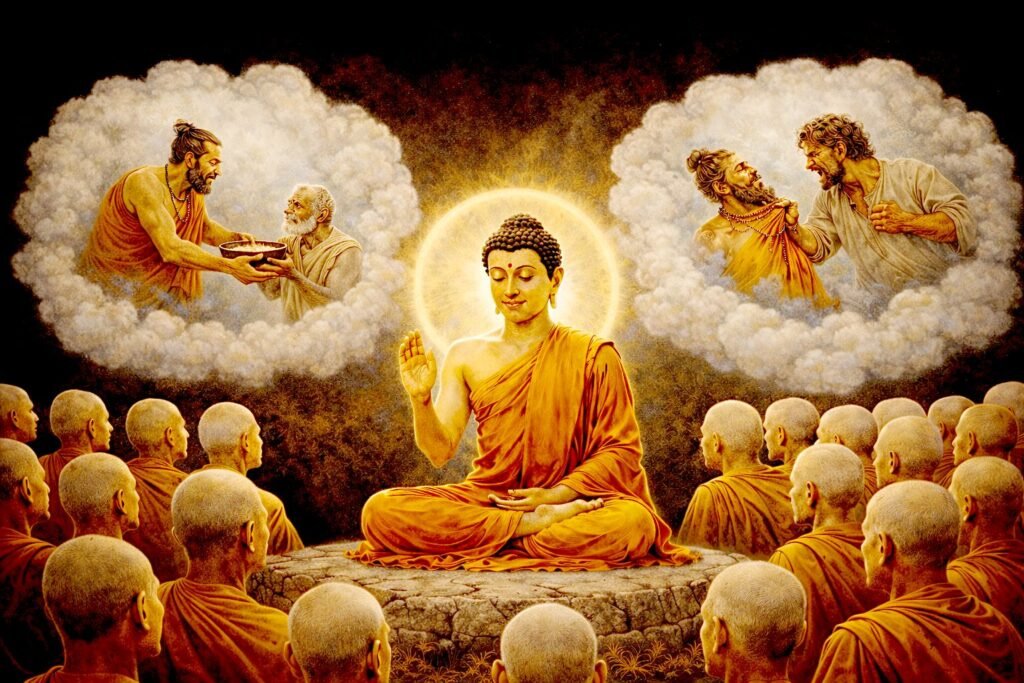
nonlinear karma giving and suffering mahakammavibhanga sutta

When Karma Refuses to Make Sense: Rethinking Moral Causation in the Mahākammavibhaṅga Sutta

What if moral causation does not work the way we think it does? Drawing on the Mahākammavibhaṅga Sutta, this essay challenges the deeply ingrained belief that good actions lead to good outcomes and bad actions to suffering. Instead, it presents karma as a nonlinear process unfolding across time, where intention, action, and consequence do not align in any simple way. By shifting the focus from outcomes to intention (cetanā), the essay redefines ethical responsibility and exposes the limits of our habitual tendency to judge too quickly. In a world that appears morally opaque, understanding karma may not make us better judges—but more cautious ones.
When Karma Refuses to Make Sense: Rethinking Moral Causation in the Mahākammavibhaṅga Sutta Read More »

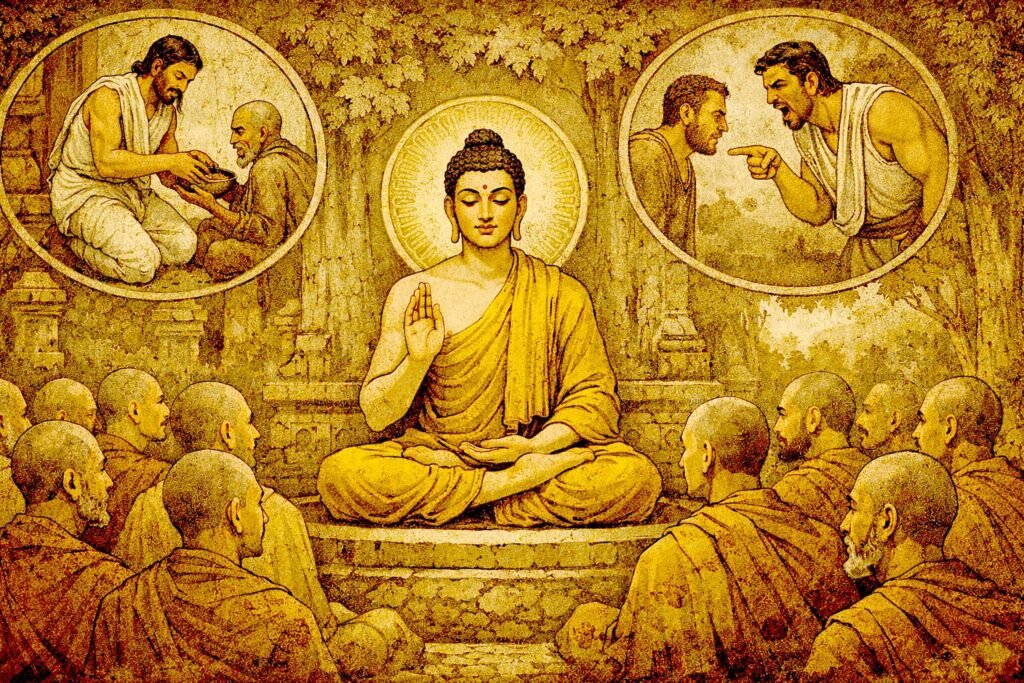
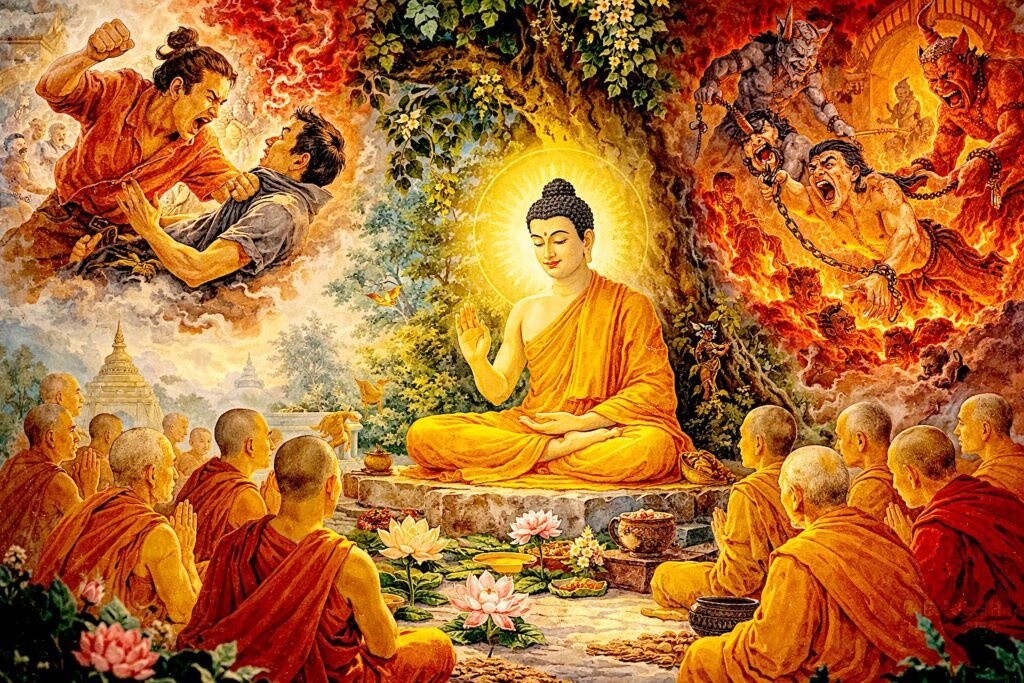
buddha teaching karma anger hell

The Wise and the Foolish: Two Pedagogies of Buddhist Ethics

This article compares two Buddhist scriptures sharing the title “The Wise and the Foolish”: the Bālapaṇḍita Sutta of the Majjhima Nikāya and the Mahāyāna Xianyu Yinyuan Jing. Although they differ in literary form—philosophical discourse and karmic narrative—both texts convey the same ethical foundation of the Dharma: avoiding unwholesome actions and cultivating wholesome conduct.

The Wise and the Foolish: Two Pedagogies of Buddhist Ethics Read More »

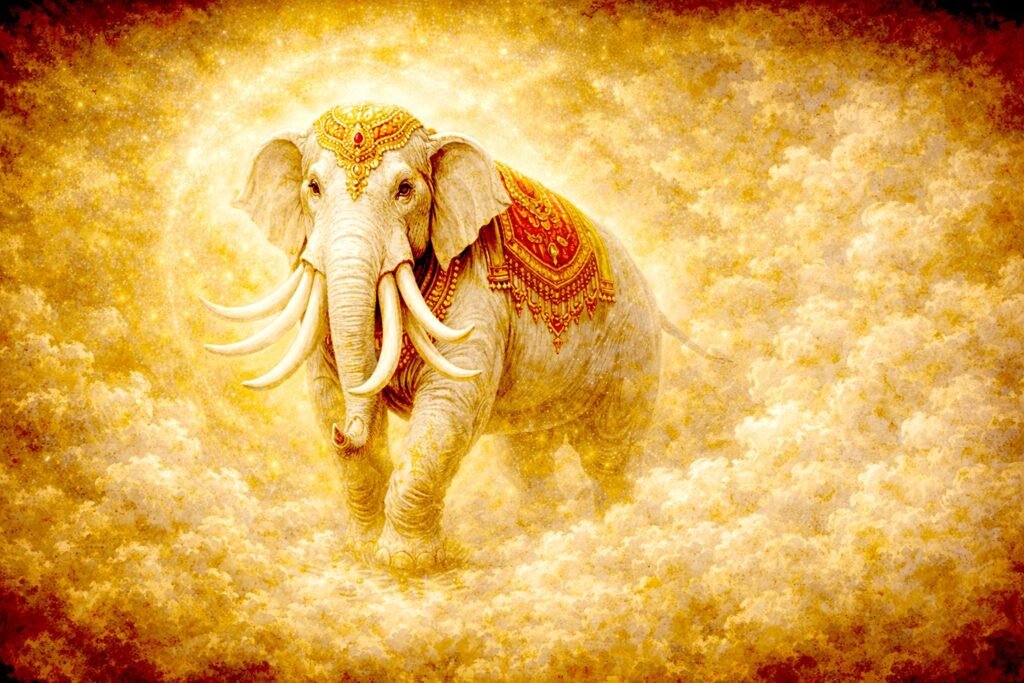
six tusked white elephant dream queen maya buddhist art

The Dream of the White Elephant: A Comparative Reading of Early and Later Buddhist Birth Narratives

This article examines the development of the six-tusked white elephant motif in Buddhist literature and art. By comparing early canonical sources such as the Acchariya-abbhūta-dhamma Sutta (MN 123) with later biographies including the Lalitavistara, the Mahāvastu, and the Abhiniṣkramaṇa Sūtra, it explores how Queen Māyā’s dream gradually evolved into a rich symbolic narrative expressing the Bodhisattva’s conception.

The Dream of the White Elephant: A Comparative Reading of Early and Later Buddhist Birth Narratives Read More »

buddha teaching monks three realms bahudhatuka sutta mn115

Understanding the Structure of Experience: An Analysis of the Bahudhātuka Sutta (MN 115)

The Bahudhātuka Sutta (MN 115) presents a profound analysis of the many elements (dhātu) that structure human experience. By examining various systems of elements—including cosmological realms, sensory processes, and domains of feeling—the discourse reveals how correct understanding of these elements becomes the foundation of wisdom in early Buddhist thought.

Understanding the Structure of Experience: An Analysis of the Bahudhātuka Sutta (MN 115) Read More »

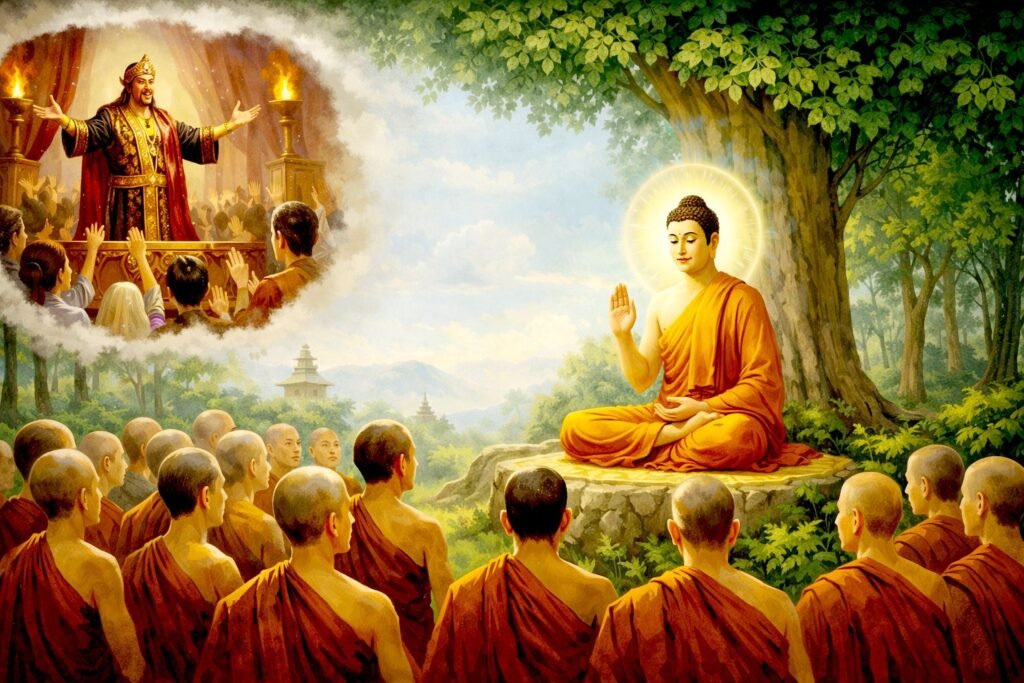
buddha teaching monks sappurisa sutta spiritual pride

Subtle Conceit in the Spiritual Life: An Analysis of the Sappurisa Sutta (MN 113)

This essay offers a philosophical reading of the Sappurisa Sutta, focusing on the subtle dynamics of spiritual pride within the religious life. The discourse distinguishes between the conduct of a “true person” and that of a “false person,” showing how even commendable qualities—such as moral discipline, learning, and meditative attainment—can become sources of comparison and conceit. By examining this contrast, the essay highlights a central insight of the sutta: the greatest challenge on the spiritual path is not merely external obstacles, but the subtle reappearance of the ego within the very achievements of the path itself.

Subtle Conceit in the Spiritual Life: An Analysis of the Sappurisa Sutta (MN 113) Read More »

buddha teaching sappurisa asappurisa culapunnama sutta

The True and the False Person: Spiritual Authenticity in the Cūḷapuṇṇama Sutta

This article examines the Cūḷapuṇṇama Sutta (MN 110) as a philosophical reflection on moral character and spiritual authenticity in early Buddhism. Through the contrast between the false person (asappurisa) and the true person (sappurisa), the discourse presents a comprehensive account of how ethical qualities, patterns of thought, social relationships, and forms of practice interact to shape human character. Rather than portraying moral identity as a fixed essence, the sutta suggests that character emerges from a dynamic process of cultivation in which faith, mindfulness, wisdom, and right understanding gradually transform the structure of one’s life. By analyzing this teaching, the article argues that the figure of the “true person” represents not merely a moral label but an integrated ethical ideal and a model of spiritual transformation in early Buddhist thought.

The True and the False Person: Spiritual Authenticity in the Cūḷapuṇṇama Sutta Read More »

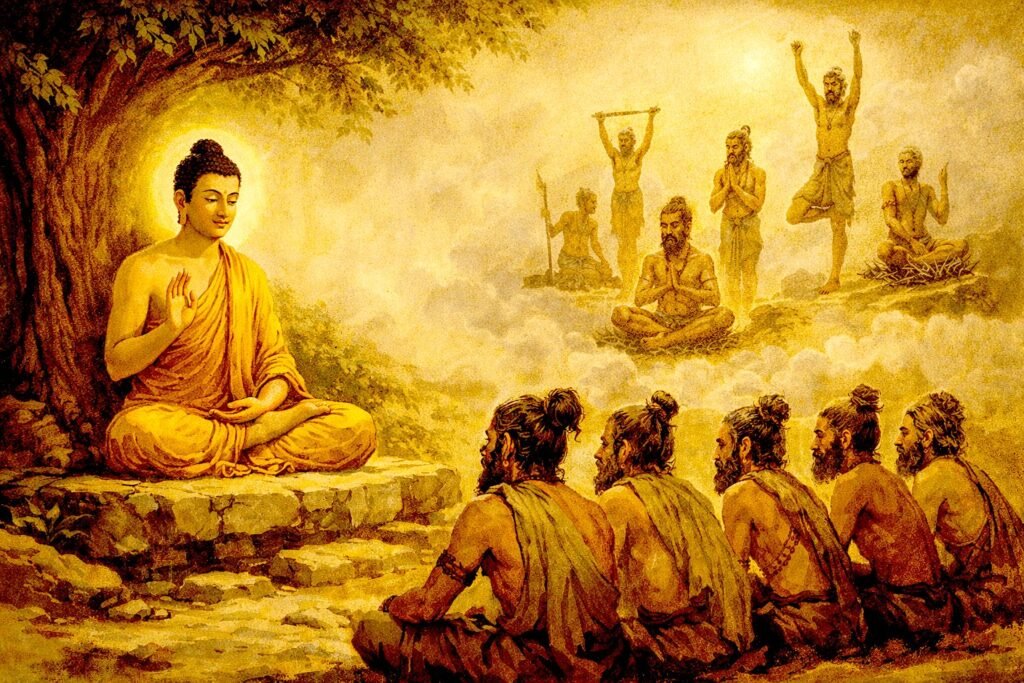
buddha teaching nigantha ascetics devadaha sutta

Asceticism and the Problem of Karma: A Philosophical Interpretation of the Devadaha Sutta

The Devadaha Sutta presents one of the most important early Buddhist critiques of asceticism and the doctrine of karmic purification through suffering. This study examines the dialogue between the Buddha and the Nigaṇṭhas, whose teachings are historically associated with Jainism, and analyzes the epistemological and logical problems within the belief that suffering can eliminate past karma. By exploring this debate, the article shows how early Buddhism reinterprets the relationship between karma, suffering, and liberation, ultimately pointing toward the Middle Way as an alternative to both karmic determinism and extreme ascetic practices.

Asceticism and the Problem of Karma: A Philosophical Interpretation of the Devadaha Sutta Read More »

sariputta teaching dhananjani brahma loka

Skillful Means in Buddhist Thought: From the Dhanañjāni Sutta to the Lotus Sūtra and the Vimalakīrti Nirdeśa

This article explores the concept of upāya-kauśalya (skillful means) through a comparative reading of the Dhanañjāni Sutta, the Lotus Sūtra, and the Vimalakīrti Nirdeśa Sūtra, showing how Buddhist thought understands the path to awakening as a dynamic interplay between ultimate truth and flexible methods of teaching.

Skillful Means in Buddhist Thought: From the Dhanañjāni Sutta to the Lotus Sūtra and the Vimalakīrti Nirdeśa Read More »

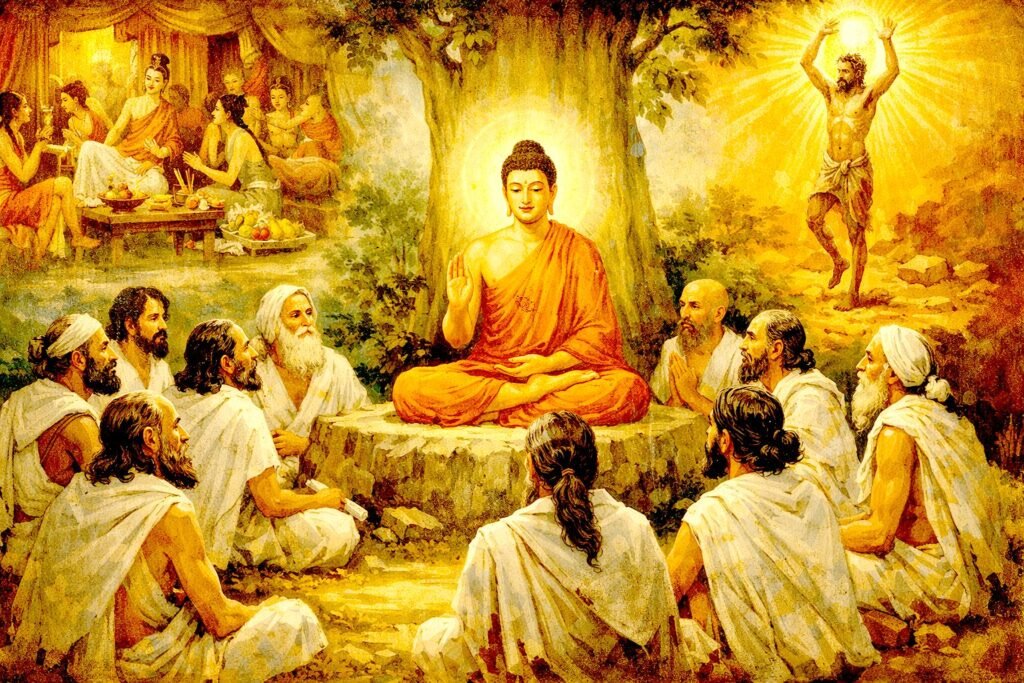
buddha middle way teaching ascetics extremes

Spiritual Authority in Early Buddhism: A Comparative Study of Three Nikāya Discourses

This article examines the concept of spiritual authority in early Buddhism through a comparative study of the Mahāsakuludāyi Sutta, the Cūḷahatthipadopama Sutta, and the Sāmaññaphala Sutta, showing how the Buddha’s authority rests not on ascetic prestige or revelation but on the verifiable effectiveness of the path to liberation.

Spiritual Authority in Early Buddhism: A Comparative Study of Three Nikāya Discourses Read More »

fire metaphor middle way aggivacchagotta sutta

Beyond the Two Extremes: Dependent Origination and the Middle Way in the Kaccāyanagotta and Aggivacchagotta Suttas

Examining the Aggivacchagotta and Kaccāyanagotta Suttas together, this study argues that the Buddha’s Middle Way is not a compromise between metaphysical extremes but a shift in perspective grounded in dependent origination, where questions framed in terms of existence or non-existence lose their applicability.

Beyond the Two Extremes: Dependent Origination and the Middle Way in the Kaccāyanagotta and Aggivacchagotta Suttas Read More »