
Le Hoang Da
Buddhist Scholar
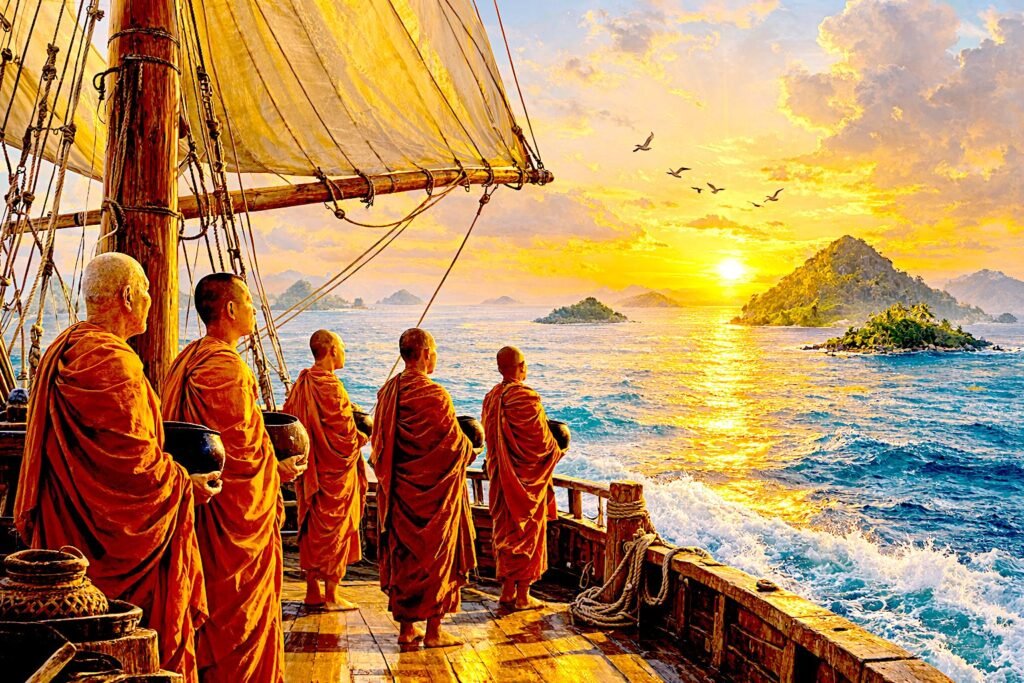
Figure 1: Buddhist monks traveling across the Indian Ocean on a sailing ship, symbolizing the maritime transmission of Buddhism across island networks.
I. Introduction: Buddhism and the Space of the Indian Ocean
In much of modern scholarship on the history of Buddhism, the spread of this religion has often been explained through two familiar geographical spaces. The first is the Eurasian continent, where the commercial routes of the Silk Road facilitated the transmission of Buddhism from India to Central Asia, China, and eventually East Asia. The second is the Himalayan region, where the mountain corridors connecting the Indian subcontinent with Tibet became the principal pathways for the transmission of later Indian Buddhist traditions, particularly Vajrayāna. Within this interpretive framework, the history of Buddhism is frequently imagined as a process of diffusion along two axes: a continental axis and a highland axis.
Yet this perspective reflects only part of the historical reality. Beyond the overland routes and mountain corridors, there existed a third space that played a no less significant role in the formation of the premodern Buddhist world: the Indian Ocean. For many centuries before the Common Era, this vast maritime region had already developed into a complex network of trade linking the ports of India with Sri Lanka, Southeast Asia, the Arabian Peninsula, and the eastern coast of Africa. These maritime routes did not merely transport commodities; they also carried religious ideas, cultural practices, and forms of knowledge. In this context, merchants, sailors, and religious practitioners became important agents in the dissemination of many religious traditions, including Buddhism.
In recent decades, a number of scholarly works have begun to emphasize the importance of the Indian Ocean world in the religious history of Asia. However, in the case of Buddhism this dimension remains relatively underexplored compared with the extensive scholarship on the Silk Road or the Himalayan routes. One reason for this imbalance lies in the scarcity of direct sources describing Buddhist journeys across the sea. Most early Buddhist texts focus on religious centers located on land, while references to oceanic travel appear only sporadically in biographical traditions or in narratives with partly legendary character.
Nevertheless, a few rare sources allow us to glimpse what might be described as a maritime Buddhist world. One of the most notable examples is the study by the Italian scholar Giuseppe Tucci concerning the travels of a Buddhist sādhu known as Buddhagupta. Drawing upon Tibetan sources and biographical traditions, Tucci reconstructed an astonishing sequence of journeys extending from India to Sri Lanka, across the islands of the Indian Ocean, toward Southeast Asia, and possibly even reaching the coastal regions of East Africa. These accounts suggest that Buddhist practitioners in the later phases of Indian Buddhism did not move solely within the boundaries of the subcontinent but participated in a much wider network of mobility linking multiple regions of the premodern world.
Particularly noteworthy is the fact that this journey unfolded within the context of Vajrayāna, a phase in the history of Indian Buddhism often associated with itinerant practitioners, the traditions of the Mahāsiddhas, and decentralized religious networks. Within this environment, practitioners were not necessarily tied to fixed monastic institutions but could travel between different religious centers in search of teachers and tantric transmissions. This very flexibility enabled the formation of religious networks that extended beyond the boundaries of kingdoms and even beyond the geographical limits of the continent itself.
When Tucci’s data are placed within the broader context of Indian Ocean history, it becomes possible to recognize that the premodern Buddhist world may have been far more interconnected across continents than is commonly assumed. The ports of western India, the Buddhist centers of Sri Lanka, the islands of Southeast Asia, and the commercial routes leading toward East Africa may have formed a network of connections within which Buddhist practitioners moved alongside merchants and migrant communities. Within this network, religion and commerce did not exist as separate spheres but often interacted with and reinforced one another.
This article therefore seeks to reconsider the geographical history of Buddhism through the lens of the Indian Ocean space. Drawing upon the materials collected by Tucci from Tibetan sources and related historical traditions, the study will examine the maritime routes, religious centers, and geographical regions mentioned in the journey of Buddhagupta. By situating these data within the broader context of the commercial and cultural exchanges of the Indian Ocean world, the article argues that the spread of Buddhism in the later period of Indian history cannot be fully understood if it is confined solely to the overland routes of the continent.
In other words, alongside familiar models such as “Silk Road Buddhism” or “Himalayan Buddhism,” we may need another concept to describe a significant dimension of the premodern Buddhist world: “Oceanic Buddhism.” This term refers to a religious network that emerged and developed within the vast maritime space of the Indian Ocean. Within this environment, practitioners, merchants, and sailors together created routes connecting distant shores, carrying not only goods but also the teachings, symbols, and spiritual traditions of Buddhism.
II. The Vajrayāna World in the Late Phase of Indian Buddhism
To understand the significance of Buddhist journeys across the vast space of the Indian Ocean, it is first necessary to place them within the broader historical context of late Indian Buddhism. From roughly the eighth to the twelfth centuries, Buddhism in India underwent profound transformations. While major monastic institutions such as Nālandā and Vikramaśīla continued to function as important centers of learning, the religious life of Indian Buddhism began to assume new forms. Alongside traditional monastic communities, new modes of religious practice emerged, particularly the traditions of Vajrayāna and the itinerant communities of practitioners associated with the Mahāsiddhas.
Vajrayāna was not merely a new doctrinal system but also a highly flexible form of religious practice. In many cases, Vajrayāna practitioners were not strictly bound to fixed monastic life but could move between different religious centers in search of teachers and tantric transmissions. The biographical traditions of the Mahāsiddhas frequently portray them as wandering figures who appeared in a wide range of geographical settings, from Bengal and Assam to Nepal, Kashmir, and Tibet. The image of the itinerant practitioner thus became one of the characteristic symbols of the Vajrayāna world.
Within this religious environment, many important tantric texts were composed and widely transmitted. Among the most influential of these was the Hevajra Tantra. This text, together with many other tantras, contributed to the formation of complex systems of practice that combined ritual techniques, symbolic imagery, and Buddhist philosophical ideas with new ceremonial elements. These traditions were not confined to the major monastic centers but circulated through networks of practitioners and communities of practice spread across the Indian subcontinent.
One of the defining features of the Vajrayāna world was the existence of decentralized religious networks. Unlike traditional monastic systems, in which religious authority was often concentrated in major academic institutions, many Vajrayāna communities functioned through personal relationships between teachers and disciples. Practitioners frequently had to travel from one region to another in order to receive different lineages of transmission. This process of mobility gave rise to expansive religious networks that crossed the boundaries of kingdoms and geographical regions.
Within this context, the coastal regions of India began to assume increasing importance. Areas such as Bengal, Orissa, and the western coastline of the subcontinent were not only vibrant centers of commerce but also places where multiple religious traditions encountered one another. Major ports attracted merchants from across the Indian Ocean world, from the Arabian Peninsula to Southeast Asia. The interaction among merchants, sailors, and religious practitioners created a particularly fertile environment for the circulation of religious ideas.
It was in this environment that Buddhist practitioners could participate in the broader communication networks of the Indian Ocean world. Merchant vessels carried not only spices, textiles, and precious metals but also passengers from diverse cultural and religious backgrounds. For Vajrayāna practitioners, maritime travel could thus become an effective means of reaching distant religious centers. Although such journeys are not always described in detail in Buddhist texts, scattered sources suggest that practitioners occasionally took part in the maritime trade routes linking many regions of the premodern world.
Another factor encouraging the mobility of practitioners was the universal orientation of many Vajrayāna traditions. Tantric texts often portray the world as a vast mandala in which sacred sites are distributed across many different regions. Practitioners were therefore sometimes encouraged to undertake pilgrimages or journeys in search of sacred locations or renowned teachers. In many cases, such journeys extended beyond the land routes of the subcontinent and reached the maritime spaces of the surrounding oceans.
From this perspective, the journeys described in the Tibetan sources studied by Giuseppe Tucci should not be regarded as entirely exceptional phenomena. Rather, they may reflect a less frequently acknowledged aspect of the late Vajrayāna world: a religious environment in which practitioners, merchants, and sailors participated together in expansive networks of mobility linking multiple regions of Asia and even extending beyond the boundaries of the continent. Within this dynamic setting, the maritime journeys of Buddhist sādhus become far more comprehensible.
Before examining in detail the maritime routes and geographical locations mentioned in the travels of Buddhagupta, it is therefore essential to recognize that such journeys were not isolated events. They were products of a highly mobile Vajrayāna world in which movement, exchange, and connectivity played central roles in religious life. It was precisely this dynamic religious environment that provided the historical foundation for the emergence of Buddhist networks across the vast space of the Indian Ocean.
III. The Ports of Western India and the Gateway to the Indian Ocean
If the late Vajrayāna world of Indian Buddhism provided the religious context for the journeys of Buddhist sādhus, it was the ports of the subcontinent that served as the material gateways through which these journeys could extend into the vast space of the Indian Ocean. For many centuries before the Common Era, the western coast of India had already become one of the most dynamic commercial regions of the ancient world. Maritime trade routes linking the subcontinent with the Arabian Peninsula, East Africa, and Southeast Asia formed a network of sea-borne communication through which goods, people, and cultural ideas constantly moved back and forth.
One of the most important coastal regions within this network was Konkan. Stretching between Gujarat and the Malabar coast, Konkan long functioned as a commercial corridor connecting the inland centers of India with the maritime world. Numerous ports along this coastline acted as key transshipment points for trade routes extending westward toward the Arabian Peninsula and East Africa, as well as southward and eastward toward Sri Lanka and Southeast Asia.
Sources related to the journey of Buddhagupta suggest that several ports in this region may have served as departure points for Buddhist practitioners participating in maritime trade routes. Places such as Goa, Chaul, and Dabhol were once flourishing commercial centers during the medieval period. At these ports, merchant vessels from many parts of the Indian Ocean gathered according to the rhythm of the monsoon seasons, forming cosmopolitan trading communities marked by diversity in language, religion, and culture. Within such an environment, the presence of religious practitioners was not unusual. Sādhus and monks often traveled alongside merchant groups, taking advantage of existing transportation networks to undertake pilgrimages or to seek out new religious centers.
Such ports were not merely places of commercial exchange but also zones of cultural interaction. Merchants arriving from Persia, Arabia, and Southeast Asia often brought with them their own religious traditions, while the local communities of India encompassed a variety of faiths including Hinduism, Buddhism, and Jainism. This diversity created an environment in which religious ideas could be exchanged and transmitted with considerable flexibility. In many cases, ports became meeting points where practitioners from different traditions could encounter one another and share knowledge.
For Vajrayāna practitioners, such coastal commercial centers may have held particular importance. Unlike monks bound closely to fixed monastic institutions, many Vajrayāna practitioners operated within decentralized religious networks and tended to move between multiple centers. Access to maritime routes therefore opened possibilities for travel far beyond the limits of the subcontinent. Through merchant vessels, practitioners could reach the islands of the Indian Ocean, the Buddhist centers of Sri Lanka, and even more distant regions of Southeast Asia.
A crucial factor that made the maritime trade of the Indian Ocean so effective was the system of monsoon winds. For centuries, merchants had learned to take advantage of the cyclical patterns of the monsoon in order to travel between the different coasts of the ocean. At certain times of the year, the winds allowed ships to depart from the Indian coast toward the Arabian Peninsula and East Africa; at other times, the reverse winds enabled them to return to the subcontinent. This natural system created a seasonal rhythm of commerce in which Indian ports became temporary gathering points for international merchant communities.
Within this context, Buddhist practitioners traveling along maritime routes might have had to remain in port cities for several months before continuing their journeys. Such periods of waiting could provide opportunities for religious activities such as teaching, exchanging doctrinal ideas, or establishing connections with local communities. Ports therefore functioned not only as physical points of departure for sea voyages but also as important nodes within wider religious networks.
Seen from this perspective, the ports of western India can be understood as gateways to a maritime Buddhist world. It was here that practitioners from the inland religious centers of the subcontinent could enter the expansive communication networks of the Indian Ocean. From the ports of Konkan and Gujarat, sea routes opened in multiple directions: southward to Sri Lanka, eastward to the islands of Southeast Asia, and westward to the coasts of East Africa. These routes carried not only commodities but also religious traditions and mobile communities of practitioners.
It was from such coastal gateways that the journey of Buddhagupta began to expand into the maritime world. If the earlier sections of this study have illustrated the religious context of late Vajrayāna, the ports of western India represent the crucial point of connection between that religious world and the wider communication networks of the Indian Ocean. From here, practitioners could sail southward toward the Buddhist centers of Sri Lanka—an island that played a key role in the religious and commercial networks of the region.
The next section of this article will therefore turn to examine the role of Sri Lanka within this maritime Buddhist world, and how the island became one of the major transit hubs in Buddhist journeys across the Indian Ocean.
IV. Sri Lanka: A Buddhist Center of the Maritime World
In the history of premodern Buddhism, few places played as central a role in the religious and commercial networks of the Indian Ocean as Sri Lanka. Situated just south of the Indian subcontinent, the island early became a meeting point for maritime routes connecting South Asia with Southeast Asia and beyond. The ports of Sri Lanka were not only places where merchant ships stopped to replenish supplies and exchange goods but also locations where religious communities from different regions encountered and interacted with one another.
From the perspective of Buddhist history, Sri Lanka has long been regarded as one of the most important centers of the Buddhist world. Historical traditions of the island record that Buddhism was introduced there at a very early stage, and over the following centuries Sri Lanka developed into a renowned center of monastic learning and religious scholarship. The major monasteries of the island did not merely train local monks but also attracted practitioners from various regions of the Indian subcontinent and neighboring areas. For this reason, Sri Lanka was often seen as a key node within the pilgrimage networks of the Buddhist world.
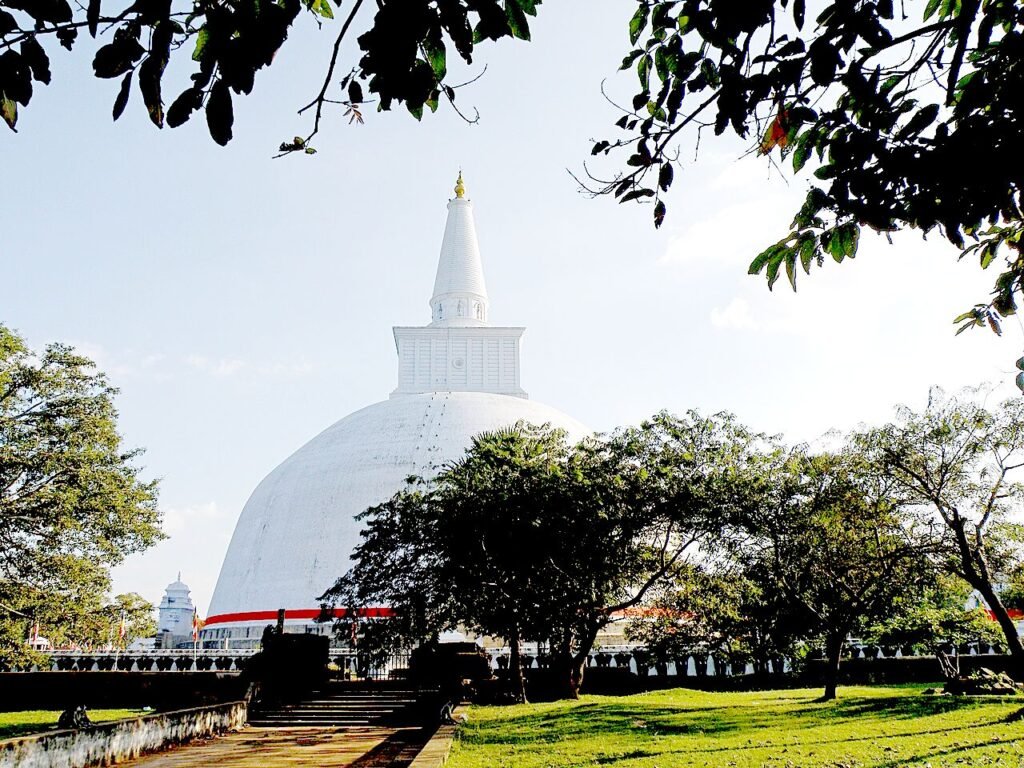
Figure 2: Ruwanwelisaya Stupa in Anuradhapura, Sri Lanka, one of the most important Buddhist monuments of the island and a major pilgrimage center in the premodern Buddhist world. Source: Wikimedia Commons
Yet the importance of Sri Lanka was not limited to the religious sphere alone. Owing to its particular geographical position, the island also served as a major transshipment point within the maritime trade of the Indian Ocean. Merchant vessels sailing eastward from the western coast of India frequently stopped at Sri Lanka before continuing their journeys toward the regions of Southeast Asia. Likewise, ships traveling from the eastern seas often called at Sri Lankan ports before crossing back toward the subcontinent. As a result, the ports of Sri Lanka became vibrant commercial hubs where goods, people, and cultural ideas were constantly exchanged.
Figure 3: The Indian Ocean seen from the coast of Sri Lanka. For centuries, the island stood at the crossroads of maritime routes linking South Asia with Southeast Asia and the wider Indian Ocean world. Source: Wikimedia Commons
It was precisely this combination of religious and commercial significance that made Sri Lanka a unique location within the maritime Buddhist network. For Buddhist practitioners engaged in travel, the island could serve multiple functions. It could act as a stopping point along pilgrimage routes, a place to seek teachers and religious traditions, or simply a transit station on journeys toward more distant regions of the Indian Ocean. In many cases, practitioners from the subcontinent might remain in Sri Lanka for extended periods before continuing their travels.
Sources related to the journey of Buddhagupta indicate that Sri Lanka was indeed one of the significant locations visited by this Buddhist sādhu during his travels. According to the materials studied by Giuseppe Tucci, Buddhagupta remained on the island for several years, residing in a mountainous forest region where earlier practitioners had engaged in meditation. Such details suggest that Sri Lanka was not merely a temporary stop but may also have functioned as a center of religious practice for itinerant ascetics.
Another factor that enhanced the importance of Sri Lanka in the maritime Buddhist world was its position within the monsoon-based navigation system of the Indian Ocean. As mentioned in the previous section, merchants in this region had long relied on the cyclical pattern of monsoon winds to travel between different coasts of the ocean. Sri Lanka lies close to the intersection of several major sea routes, which often required ships to anchor at the island while waiting for the seasonal winds to change before continuing their voyages. This meant that Sri Lankan ports frequently became temporary gathering places for international merchant communities.
Within such an environment, Buddhist practitioners could easily come into contact with individuals arriving from many different parts of the Indian Ocean world. These encounters could create opportunities for the transmission of teachings, the exchange of knowledge, and the establishment of religious relationships that transcended geographical boundaries. It was precisely within such zones of cultural interaction that religious ideas could travel alongside commercial networks.
Seen from a broader perspective, Sri Lanka may be understood as a bridge between the Indian subcontinent and the maritime world. From the island’s ports, sea routes extended in multiple directions: westward toward the coasts of the Arabian Peninsula and East Africa, and eastward toward the islands of Southeast Asia. Within this extensive network of maritime communication, Sri Lanka functioned as a central point where several major sea routes intersected.
For this reason, Buddhagupta’s stay in Sri Lanka should not be interpreted merely as an incidental detail in his journey. Rather, it reflects the island’s distinctive position within the structure of the maritime Buddhist world. From Sri Lanka, practitioners could gain access to multiple routes across the Indian Ocean, opening the possibility of travel to distant regions that may previously have lain beyond the reach of the continental Buddhist world.
From this crucial transit point, Buddhagupta’s journey continued to expand across the wider seas of the Indian Ocean. The sources indicate that after leaving Sri Lanka he traveled toward several other islands of the ocean, locations described in Tibetan traditions as sacred lands scattered across the maritime world. These islands lead us deeper into the realm of sacred geography within the Vajrayāna tradition—a world in which holy sites are not confined to the land but may also appear amid the vast expanse of the ocean.
V. The Sacred Islands of the Indian Ocean
In many religious traditions of South Asia, the ocean is not conceived as an empty space separating distant lands, but rather as a vast world dotted with islands endowed with special religious significance. Late Buddhist texts and Tibetan traditions sometimes describe these islands as sacred locations where practitioners might encounter spiritual masters, receive esoteric teachings, or perform particular rituals. From this perspective, the space of the Indian Ocean may be understood as part of the sacred map of the Vajrayāna world.
In the sources examined by Giuseppe Tucci, several islands are mentioned with names that carry symbolic meanings. One of these is Candradvīpa, literally “the Island of the Moon.” The name suggests that the island was not understood merely as a geographical location but also possessed symbolic significance within religious tradition. In many systems of Vajrayāna symbolism, the moon is associated with wisdom, purity, and deep states of meditation. An island bearing the name “Island of the Moon” could therefore be imagined as a place suitable for practitioners seeking spiritual cultivation.
Another place mentioned in Tibetan sources is Sūryadvīpa, or “the Island of the Sun.” If Candradvīpa symbolizes wisdom and tranquility, Sūryadvīpa may evoke images related to energy, power, and illumination. In the context of tantric traditions, the symbols of the sun and the moon are often used to express complementary principles within spiritual practice. The appearance of such place names within travel traditions suggests that the journeys of Vajrayāna practitioners were sometimes described in a language that was simultaneously geographical and symbolic.
Alongside these symbolically named islands, the sources also refer to certain locations that may correspond to real island regions within the Indian Ocean. One such place is Paigu, a name that may reflect the manner in which Tibetan traditions recorded unfamiliar foreign locations through phonetic transcription and linguistic transformation. Although the precise identification of such places is often difficult, their appearance in travel narratives indicates that Buddhist practitioners possessed at least some awareness of the existence of numerous islands scattered across the ocean.
Another particularly noteworthy name is Potala, a term that recalls the sacred mountain associated with Avalokiteśvara. In both Mahāyāna and Vajrayāna Buddhist traditions, Potala is often described as the dwelling place of Avalokiteśvara, the Bodhisattva embodying compassion. Although Potala is best known in the Tibetan context—where the name was later used for the famous Potala Palace in Lhasa—earlier traditions sometimes located Potala along coastal regions or on islands within the Indian Ocean. This suggests that within the religious imagination of many practitioners, the ocean itself could also contain important sacred sites.
These place names indicate that the Indian Ocean in Vajrayāna traditions was not understood purely in geographical terms. Rather, it was integrated into a broader sacred geography in which distant lands could become nodes within religious traditions. Maritime journeys therefore represented not merely physical travel but also spiritual quests. The movement from one island to another could be interpreted as part of a broader search for knowledge and awakening.
From a historical perspective, the appearance of such islands in travel traditions may reflect the expanding geographical horizons of late Buddhist communities. As the commercial networks of the Indian Ocean developed, merchants and sailors carried stories of distant lands back to the ports of the Indian subcontinent. These accounts may have been absorbed and reinterpreted within religious traditions, contributing to an image of a vast world in which sacred locations could be scattered across the seas.
Within this context, the journeys of Buddhist sādhus may be understood as part of an interaction between real geography and imagined geography. Practitioners may indeed have traveled along maritime routes linking many island regions of the Indian Ocean, yet biographical traditions and religious texts sometimes reconfigured these journeys within a broader symbolic framework. It is precisely this combination of historical and symbolic elements that gives Vajrayāna travel traditions their particular richness.
From the sacred islands of the ocean, the journey of Buddhagupta appears to extend even further across the wider world of the Indian Ocean. The sources suggest that the maritime networks of this period not only connected India with Sri Lanka and Southeast Asia but also opened routes westward toward the coasts of East Africa. It is here, at the western edge of the Indian Ocean network, that we begin to encounter place names such as Zanzibar and Madagascar—distant regions that hint at a maritime Buddhist world far more extensive than is usually imagined in traditional studies of Buddhist history.
VI. East Africa in the Buddhist Imagination
In studies of Buddhist history, the region of East Africa is rarely considered part of the premodern Buddhist world. Most scholarly works tend to focus on the more familiar regions of South Asia, Central Asia, East Asia, and Southeast Asia. Yet when the sources related to the journeys of Vajrayāna practitioners are placed within the broader context of the Indian Ocean trade networks, the possibility of indirect connections between Buddhism and the coastal regions of East Africa begins to appear more significant.
For many centuries before the medieval period, Indian merchants had already participated in maritime trade routes that crossed the Indian Ocean to reach the coasts of Africa. The ports along the eastern coast of Africa became commercial hubs where merchants from the Arabian Peninsula, Persia, and the Indian subcontinent encountered one another. Within this network, commodities such as spices, textiles, precious metals, and ivory were exchanged between different regions of the ocean. More importantly, these commercial routes also created channels of cultural exchange through which religious ideas and stories about distant lands could circulate from one place to another.
One of the locations frequently mentioned in this context is Zanzibar. Situated off the eastern coast of Africa, the island has long served as one of the most important ports of the region. Merchants from many parts of the Indian Ocean often called at Zanzibar to trade goods and replenish supplies before continuing their journeys. As a result, the island became a meeting point for multiple cultures, where languages, religions, and commercial traditions intersected.
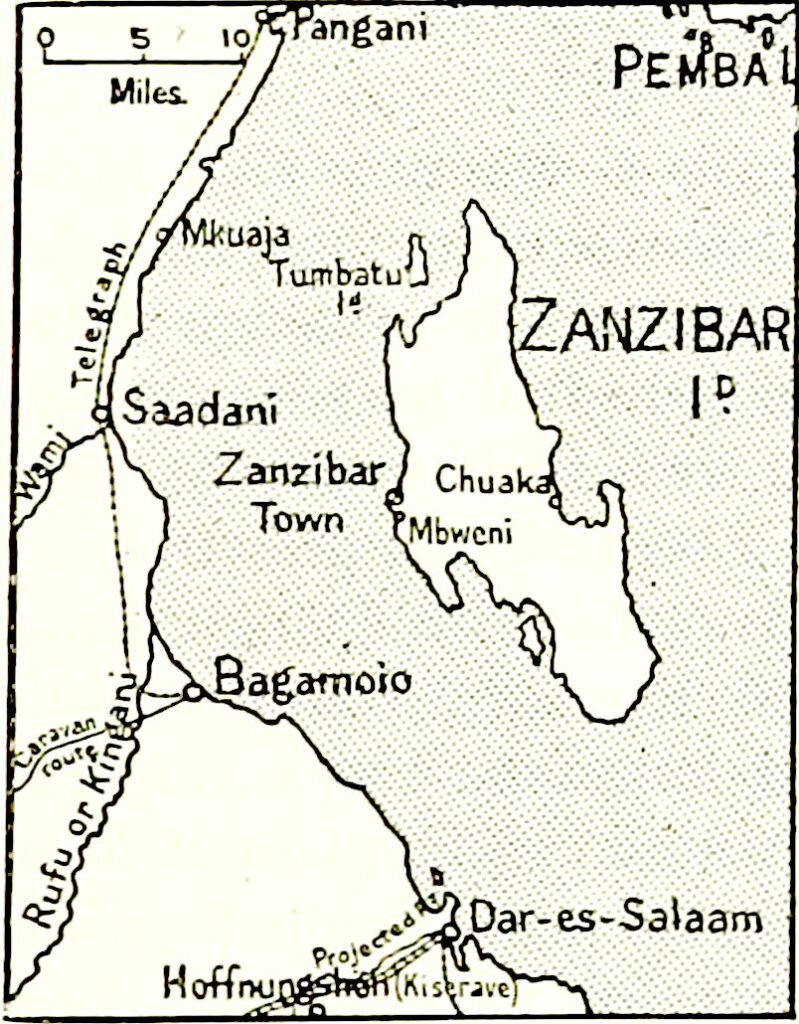
Figure 4: Map of Zanzibar and the East African coast in the western Indian Ocean. Ports such as Zanzibar formed part of the wider maritime trade networks linking Africa with the Indian Ocean world. Source: Wikimedia Commons
Another location often discussed in relation to the Indian Ocean trade network is Madagascar. With its large size and strategic position near the sea routes linking East Africa and South Asia, Madagascar attracted the attention of merchants and sailors from an early period. Historical research indicates that the island participated in the commercial networks of the Indian Ocean from very early times, hosting communities that originated from various parts of the oceanic world.
When examining the place names that appear in the Tibetan sources analyzed by Giuseppe Tucci, some of them may reflect vague memories of island regions located in the western Indian Ocean. Identifying such ancient locations in religious texts is naturally difficult, especially when the names have undergone multiple layers of transcription and linguistic transformation. Nevertheless, the appearance of references suggesting distant lands indicates that the geographical horizons of late Buddhist communities may have extended beyond the more familiar regions of South and Southeast Asia.
This does not necessarily imply that Buddhist practitioners directly established religious communities in East Africa. Rather, these references may reflect an indirect awareness of lands lying beyond the ocean, transmitted through the stories of merchants and sailors. In the ports of India and Sri Lanka, where international merchant communities gathered, religious practitioners may have heard accounts of distant islands and coasts visited by trading fleets. These narratives could then have been incorporated into biographical traditions and religious texts.
Seen from this perspective, references to East Africa in Vajrayāna travel traditions may be understood as traces of an expanded geographical imagination shaped by the commercial networks of the Indian Ocean. In this world, the ocean was no longer perceived as a boundary separating cultures but as a connective space through which distant lands could be incorporated into the imagined geography of religious communities.
The appearance of place names such as Zanzibar or Madagascar in discussions of Indian Ocean networks therefore carries significance beyond mere geography. It suggests that the scope of the premodern Buddhist world may have been far broader than is commonly assumed in traditional studies of Buddhist history. Even if Buddhist practitioners did not directly establish religious centers in East Africa, the awareness of these distant lands indicates that the world they imagined already encompassed a substantial portion of the oceanic sphere.
From the western edge of the Indian Ocean network, the narrative of this study now turns back toward the east, where maritime routes connected Sri Lanka and the Indian subcontinent with the islands of Southeast Asia. It is in these regions—particularly on islands such as Sumatra and Java—that we can observe more clearly the spread of Indian Buddhist traditions across the vast maritime world of the Indian Ocean.
VII. Suvarṇadvīpa and the Buddhist Networks of Southeast Asia
In many Sanskrit texts and later Buddhist traditions, one place name that frequently appears is Suvarṇadvīpa, literally meaning the “Island of Gold.” The term is often interpreted as referring to the resource-rich island regions located to the east of the Indian subcontinent, particularly those in maritime Southeast Asia. In many modern studies, Suvarṇadvīpa is commonly identified with Sumatra, one of the largest islands of present-day Indonesia.
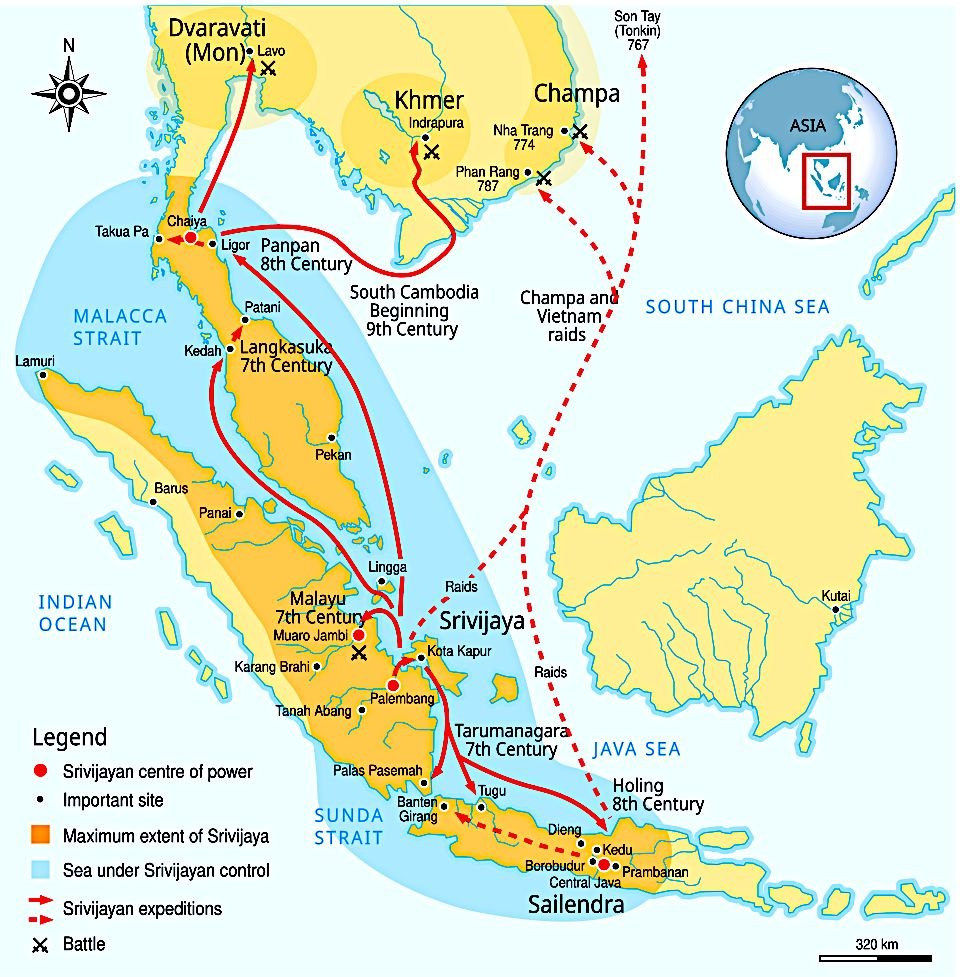
Figure 5: Map showing the approximate extent of the Srivijaya maritime empire in the 8th century, centered in Sumatra (often identified with Suvarṇadvīpa), one of the major hubs of Buddhist learning and trade in maritime Southeast Asia. Source: Wikimedia Commons
During the medieval period, Sumatra functioned as one of the most important commercial centers of the region. Maritime routes linking India with China and various parts of Southeast Asia often passed through the waters surrounding this island. Because of its strategic location, Sumatra became a meeting point for merchant communities from different regions of the Indian Ocean. Within this dynamic commercial environment, religious and cultural ideas from the Indian subcontinent were also transmitted into the region.
Historical sources indicate that Buddhist traditions and Sanskrit culture exerted a considerable influence across many parts of maritime Southeast Asia. Inscriptions, religious texts, and architectural remains in the region reveal that local communities did not merely adopt cultural elements from India but also developed them in distinctive ways of their own. In this context, maritime trade networks served as the primary channels through which religious traditions spread.
Alongside Sumatra, another region that played a particularly significant role in the history of Southeast Asian Buddhism was Java. For many centuries, this island developed into a major cultural center where Indian traditions were received and transformed within a local environment. The early dynasties of Java sponsored numerous large religious monuments, including temples and monastic complexes bearing strong influences from Mahāyāna and Vajrayāna Buddhism.
One of the most remarkable symbols of Buddhism’s presence in Java is Borobudur. Constructed in the ninth century under the Śailendra dynasty, Borobudur stands as one of the largest and most complex Buddhist monuments ever built in the premodern world. The architecture of the monument was designed as a three-dimensional mandala, in which terraces and relief panels narrate numerous stories drawn from Buddhist scriptures and Mahāyāna traditions.
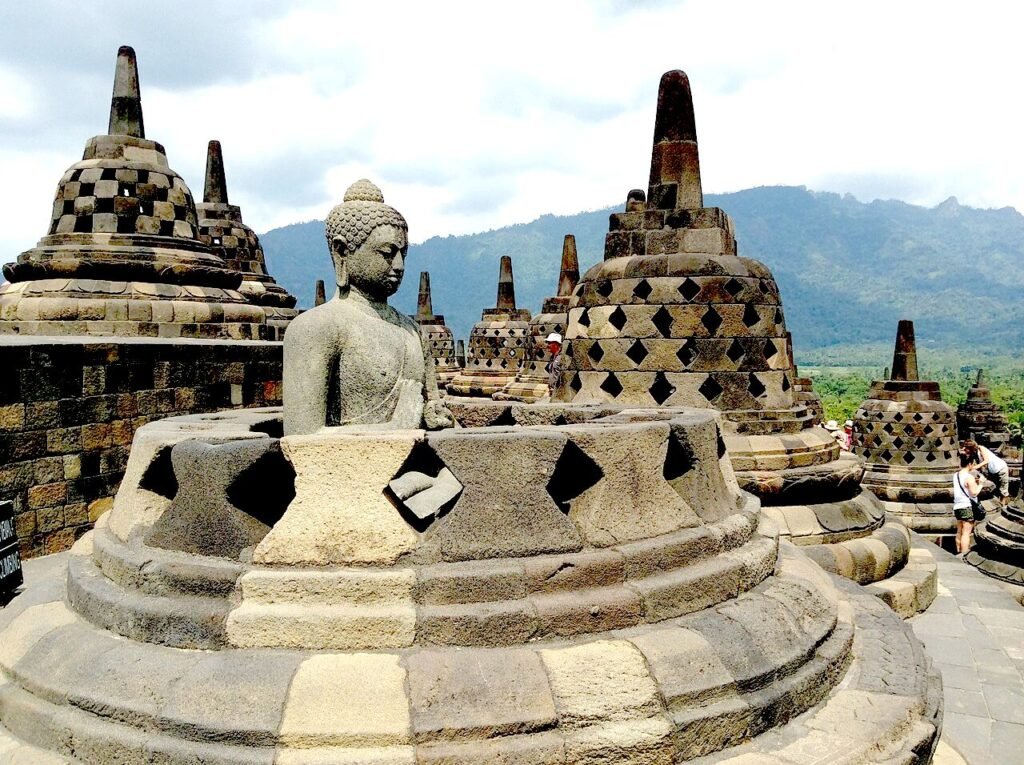
Figure 6: Borobudur Temple in Central Java, Indonesia, one of the largest Buddhist monuments in the world and a masterpiece of Mahāyāna Buddhist architecture. Source: Wikimedia Commons
Borobudur is not only a religious monument but also a material testimony to the diffusion of Indian Buddhist culture across the maritime world. The symbolic elements of the structure—from the images of Bodhisattvas to the mandala-like architectural plan—demonstrate clear influences from Buddhist traditions developed on the Indian subcontinent. At the same time, the monument reflects the creative capacity of local communities in reinterpreting these religious ideas within their own cultural contexts.
When Borobudur is placed within the broader framework of the Indian Ocean networks, the monument may be understood as a nodal point where multiple cultural currents converged. Merchants and religious practitioners from the Indian subcontinent may have contributed to bringing Buddhist traditions to the region, while the local communities of Java received and developed these traditions in distinctive ways. Through maritime trade routes, religious ideas could circulate between different regions of the ocean, creating a vast interconnected cultural world.
From this perspective, the development of Buddhism in Sumatra and Java should not be understood simply as the result of diffusion from a single center. Rather, it reflects a complex process of interaction in which local communities, international merchants, and religious practitioners all participated in shaping new traditions. It was within this environment of exchange that regional forms of Buddhism emerged and flourished.
These historical developments demonstrate that the Buddhist world of the Indian Ocean was not confined to the boundaries of the Indian subcontinent. From the ports of India, through Sri Lanka and the islands of the ocean, Buddhist traditions spread to the distant lands of Southeast Asia. Within this extensive network, centers such as Sumatra and Java became important locations where religious ideas were received, transformed, and recreated.
Having examined the island regions of Southeast Asia, we can now begin to perceive more clearly the structure of the maritime Buddhist world: a network in which practitioners, merchants, and local communities together created routes of connection extending from the Indian subcontinent to the distant islands of the ocean. In the following section, the discussion will synthesize these elements in order to examine the role of merchants, sailors, and migrant communities in the formation of the broader Buddhist networks of the Indian Ocean world.
VIII. Conclusion: Oceanic Networks and the Emergence of Mobile Tantric Buddhism
In the history of Buddhism, large monasteries have often been regarded as the primary centers of religious life. At locations such as the great Buddhist universities of ancient India, monks lived within relatively stable communities where the study of scriptures, the teaching of doctrine, and the practice of meditation were organized within clearly defined institutional frameworks. Such environments fostered a form of Buddhism that was both scholastic and monastic in character, in which monastic discipline and textual traditions played central roles.
However, when the Buddhist world is viewed within the broader context of maritime trade routes stretching across the Indian Ocean, a different picture begins to emerge. The sea routes linking the Indian subcontinent with distant island regions created a highly mobile religious environment in which practitioners frequently moved between ports, islands, and commercial centers. Within such spaces, forms of religious practice that were not tightly bound to fixed monastic institutions could assume particular importance.
Biographical traditions and texts from the later periods of Buddhism frequently refer to itinerant practitioners—yogis, sādhus, and tantric masters—who were not strictly tied to monastic life. Rather than residing permanently within established monasteries, they are often portrayed as wandering figures who traveled across multiple regions, encountered different teachers, performed specialized rituals, and transmitted religious teachings in diverse circumstances. Such figures reflect a form of Buddhism characterized by flexibility, in which the practice of the Dharma was not confined within rigid institutional structures.
Within the maritime environment of the Indian Ocean world, these flexible modes of practice may have been particularly well suited. The ports of the Indian Ocean were places where merchants, sailors, and religious practitioners from different regions encountered one another. In such spaces of cultural interaction, religious ideas could circulate and spread with relative speed. Traveling practitioners could accompany merchant vessels to distant lands, bringing their ritual traditions and spiritual practices to new communities.
In this context, forms of practice associated with tantra and yoga may have found especially favorable conditions for development. Tantric rituals were often performed in flexible settings and did not necessarily depend on the infrastructure of large monastic institutions. Similarly, yogic traditions emphasized direct experience and individual methods of practice, enabling practitioners to continue their spiritual paths even while moving between different regions.
Such forms of practice are also reflected in traditions concerning the siddha masters, figures who are often described as living outside the conventional structures of both society and monastic institutions. In many narratives, the siddhas appear as traveling practitioners who encounter teachers in distant lands and transmit special methods of practice to their disciples. Although these accounts often contain legendary elements, they also reflect an image of a religious world in which practitioners could move relatively freely across the maritime spaces of the ocean.
Viewed from this perspective, the spread of Buddhism throughout the Indian Ocean world was not solely a story of monastic centers or monumental religious architecture. It was also a story of mobile practitioners—individuals who carried the Dharma across the vast spaces of the ocean. Within this extensive network, ports and islands became meeting points where religious traditions could be transmitted, transformed, and reinterpreted.
The Buddhist world of the Indian Ocean may therefore be understood as an environment in which multiple forms of religious practice coexisted. Alongside the stable monastic centers of the Indian subcontinent, there existed a parallel world of traveling practitioners and flexible religious networks. It was precisely through the interaction between these different modes of religious life that later Buddhist traditions developed such diverse and dynamic forms of practice.
Seen in this light, the history of Buddhism in the Indian Ocean sphere suggests that the Buddha’s teachings were not transmitted solely through academic institutions or large monastic establishments. They were also carried by wandering practitioners who crossed vast maritime spaces in order to teach and practice the Dharma within a wide variety of cultural settings. It was the interaction between maritime trade networks and these flexible spiritual traditions that helped shape a broad and diverse Buddhist world extending across the Indian Ocean.
Related Studies:
Bibliography
Bentley, Jerry H. Old World Encounters: Cross-Cultural Contacts and Exchanges in Pre-Modern Times. New York: Oxford University Press, 1993.
Coomaraswamy, Ananda K. History of Indian and Indonesian Art. 1927. Reprint, New York: Dover Publications, 1965.
Davidson, Ronald M. Indian Esoteric Buddhism: A Social History of the Tantric Movement. New York: Columbia University Press, 2002.
Hall, Kenneth R. Maritime Trade and State Development in Early Southeast Asia. Honolulu: University of Hawai‘i Press, 1985.
Hodous, Lewis. Buddhism and Buddhists in China. New York: Macmillan, 1924.
Ray, Himanshu Prabha. Monastery and Guild: Commerce under the Sātavāhanas. Delhi: Oxford University Press, 1986.
Ray, Himanshu Prabha. The Winds of Change: Buddhism and the Maritime Links of Early South Asia. Delhi: Oxford University Press, 1994.
Snellgrove, David L. Indo-Tibetan Buddhism: Indian Buddhists and Their Tibetan Successors. Boston: Shambhala, 1987.
Tāranātha. History of Buddhism in India. Translated by Lama Chimpa and Alaka Chattopadhyaya. Delhi: Motilal Banarsidass, 1990.
Tucci, Giuseppe. “The Sea and Land Travels of a Buddhist Sādhu.” Indian Historical Quarterly 7 (1931): 689–702.
White, David Gordon, ed. Tantra in Practice. Princeton: Princeton University Press, 2000.