
Le Hoang Da
Buddhist Scholar
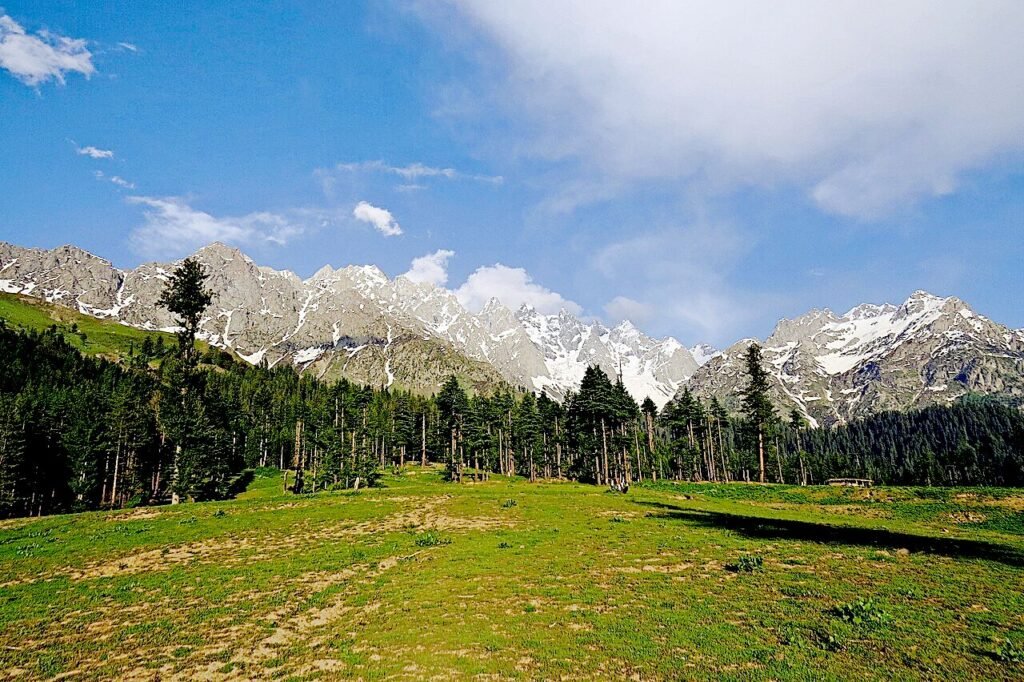
Figure 1: The alpine landscape of Boyun Plains in the Swat Valley (ancient Uḍḍiyāna), a region often associated with the early development of Tantric traditions in the Buddhist world. Source: Wikimedia Commons
I. Introduction: Tantric Buddhism and the Question of Cultural Origins
In the history of Buddhist development, the emergence of Tantric traditions—often collectively referred to as Vajrayāna—represents one of the most profound transformations in the intellectual and religious life of the Buddhist world. Beginning around the seventh century, a series of new texts appeared within the context of Indian Buddhism, including works such as the Guhyasamāja Tantra, the Hevajra Tantra, and the Cakrasaṃvara Tantra. These texts present a system of ritual and symbolism that differs significantly from earlier Buddhist traditions. In these Tantras, practitioners do not merely recite scriptures or engage in meditation in the conventional sense, but also undertake a range of esoteric practices such as mantra, mudrā, maṇḍala, and complex visualization techniques intended to identify the practitioner with the Buddhas and Bodhisattvas in their Tantric forms.
The appearance of these elements has led many scholars to raise an important question: where did Tantric Buddhism originate? Some researchers argue that Tantra developed entirely from within Indian Buddhism as an extension of earlier Mahāyāna traditions. According to this view, elements such as mantra and maṇḍala represent natural developments of devotional and contemplative practices already present in Mahāyāna Buddhism. Other scholars, however, have noted that many features of Tantra—particularly its magical rituals, goddess cults, and fierce divine imagery—are difficult to explain solely as the result of internal developments within Buddhist tradition.
Within this scholarly context, some researchers have begun to situate Tantra within a broader cultural framework. Rather than viewing Tantric Buddhism as a purely Indian phenomenon, they suggest that it may be the product of a complex environment of cultural exchange in which different religious traditions encountered and influenced one another. The region that played a particularly significant role in this process is the Himalayan world, a vast area stretching from Kashmir and Swat in the west, through Nepal and Tibet in the central Himalayas, to Assam and the eastern Himalayan regions. Throughout ancient and medieval history, this region functioned not only as a geographical boundary between India and Central Asia but also as a network of trade and pilgrimage routes linking diverse civilizations.
Within this wider environment of exchange, mystics, monks, and religious practitioners from different traditions had opportunities to meet and share ideas. Regions such as Uḍḍiyāna (the Swat Valley), Kāmārūpa (Assam), and Jālandhara are frequently mentioned in Tantric literature as important centers of esoteric practice. Notably, many of these locations lie at the margins of the ancient Indian world, where Indian religious traditions came into contact with the cultures of the Himalayan regions and Central Asia. It was precisely in these zones of cultural intersection that new forms of religious practice may have emerged through processes of interaction and transformation.
Some early twentieth-century studies attempted to explain the formation of Tantra within this context of cultural exchange. These works suggested that certain characteristic elements of Tantric traditions—such as the cults of yoginīs and ḍākinīs, as well as traditions of female practitioners—might reflect influences from shamanic traditions and local cults of the Himalayan regions. Although such hypotheses have not always been universally accepted, they have opened an important line of inquiry: rather than viewing Tantra as a closed system developing entirely within Indian Buddhism, it may be better understood as a phenomenon formed within a transregional cultural space.
Emphasizing this broader cultural context, however, does not mean denying the fundamentally Buddhist character of Tantra. Tantric traditions developed primarily within Buddhist communities and were transmitted through major intellectual centers of Indian Buddhism such as Nālandā and Vikramaśīla. The purpose of the present study, therefore, is not to separate Tantra from Buddhism, but rather to clarify the broader historical and cultural environment within which Tantric Buddhism emerged and developed.
This article approaches Tantric Buddhism from precisely this wider perspective. Instead of searching for a single point of origin, it examines how various factors—geography, culture, and language—contributed collectively to the formation of these traditions. In particular, it focuses on the Himalayan world as an intermediary zone in which the religious traditions of India, Tibet, and Central Asia interacted and influenced one another. By examining ancient Tantric centers, the traditions of yoginīs and ḍākinīs, as well as linguistic and cultural traces found within Tantric texts, it becomes possible to view Tantric Buddhism not merely as a product of Buddhist history but as part of a broader network of religious exchange across ancient Asia.
Understanding Tantric Buddhism in this way allows us to move beyond overly simplified explanations of its origins. Rather than seeing Tantra as a mysterious phenomenon that suddenly appeared in Buddhist history, it can instead be understood as the result of a long process in which religious ideas, rituals, and symbols were exchanged, transformed, and reconfigured within the multicultural environment of the Himalayan world. It was within this context of cultural interaction that Tantric Buddhism took shape and developed into one of the most complex and dynamic traditions of the Buddhist world.
II. The Emergence of Tantric Traditions in the Buddhist World
The emergence of Tantric traditions within Buddhism was not a sudden phenomenon but rather the result of a developmental process that unfolded over several centuries in the history of Buddhist thought and practice. In order to understand the formation of Tantric Buddhism, it is first necessary to situate it within the broader context of the internal evolution of Buddhism, particularly the development of Mahāyāna traditions from the early centuries of the Common Era.
In the early stages of Buddhist history, the texts of the Nikāya and Āgama traditions emphasized the path to liberation through morality (śīla), concentration (samādhi), and wisdom (prajñā). This path was presented as a systematic process of spiritual cultivation in which practitioners gradually purified the mind and attained liberation through direct insight into the impermanent (anicca), unsatisfactory (duḥkha), and non-self (anātman) nature of phenomena. Within this framework, ritual or magical elements played a relatively limited role. Although the early scriptures occasionally contain mythological or supernatural elements, the primary focus of the path remained meditation and liberating wisdom.
From around the first century of the Common Era onward, however, Buddhism began to develop in new directions through the emergence of the Mahāyāna movement. Mahāyāna scriptures such as the Prajñāpāramitā texts, the Lotus Sūtra (Saddharmapuṇḍarīka), and the Avataṃsaka Sūtra expanded the vision of Buddhism by emphasizing the Bodhisattva ideal and the existence of a vast Buddhist cosmos in which countless Buddhas and Bodhisattvas work for the liberation of sentient beings. In these texts, devotional and contemplative elements assumed increasing importance. Practitioners not only meditated on the impermanent nature of phenomena but also visualized Buddhas and Bodhisattvas, recited their names, and engaged in symbolic forms of religious practice.
Within this religious environment, certain elements that later became characteristic of Tantra began to appear. In some later Mahāyāna scriptures, the use of mantra emerged as a means of protection or as an expression of the enlightened power of the Buddhas. The presence of sacred formulas in texts such as the Prajñāpāramitā literature and the Uṣṇīṣa Vijaya Dhāraṇī suggests that sacred sound was understood as possessing a special capacity to protect and transform the practitioner’s mind. Although these elements did not yet constitute a fully developed Tantric system, they provided an important foundation for the later emergence of esoteric traditions.
Beginning around the seventh century, texts explicitly known as Tantras began to appear within the context of Indian Buddhism. These works presented a new form of religious practice in which elements such as mantra, mudrā, and maṇḍala were integrated into a complex system of ritual. One of the most significant texts of the early Tantric period is the Guhyasamāja Tantra, often regarded as one of the earliest Tantric scriptures within the Buddhist tradition. In this text, initiation rituals (abhiṣeka), maṇḍala practices, and techniques of deity visualization were systematized into a distinctive path of spiritual cultivation.
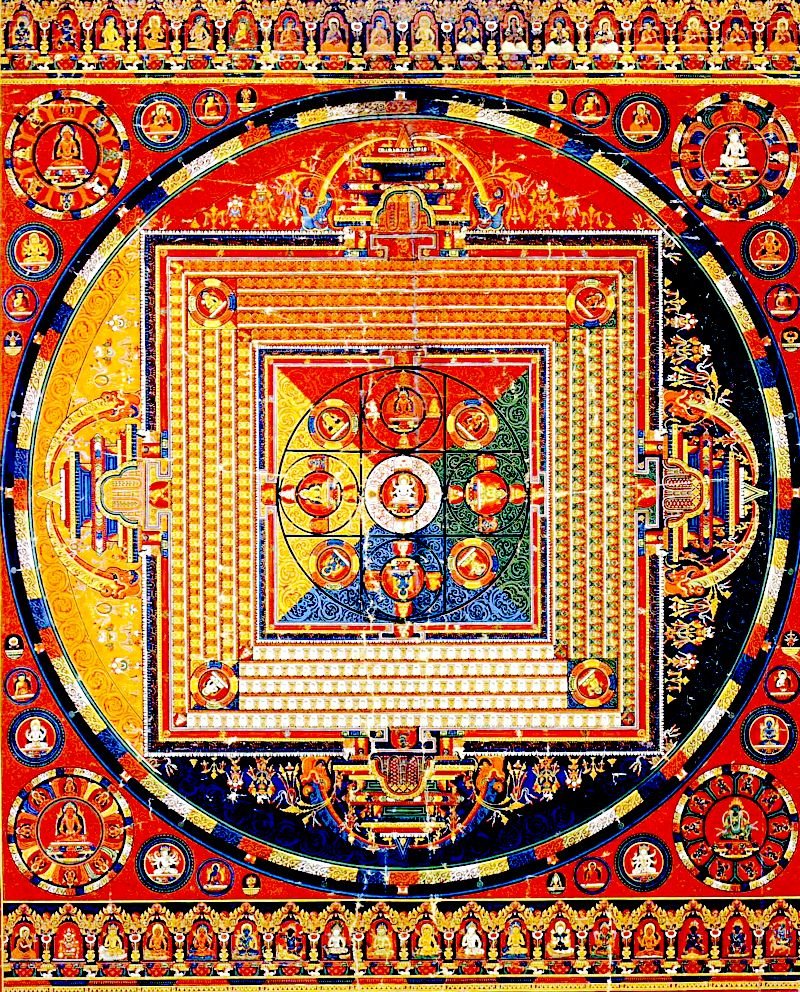
Figure 2: Vajradhātu (Diamond Realm) Mandala, a symbolic diagram used in Tantric Buddhist ritual and meditation to represent the cosmic realm of Mahāvairocana. Source: Wikimedia Commons
Later Tantric works such as the Hevajra Tantra, the Cakrasaṃvara Tantra, and the Kālacakra Tantra further developed these elements into increasingly sophisticated systems. In these texts, practitioners are instructed in the practice of deity yoga, a method in which the practitioner visualizes oneself as a Buddha or a Tantric deity. The purpose of this practice is not the worship of a deity in the conventional sense but the use of symbolic divine imagery as a means to transform perception and realize enlightenment.
One of the distinctive characteristics of Tantric Buddhism is its emphasis on the efficiency and immediacy of the path to awakening. In many Tantric texts, these practices are presented as methods capable of leading to enlightenment within a shorter period of time than traditional paths of spiritual cultivation. This emphasis does not imply that Tantra rejects the foundational teachings of Buddhism. On the contrary, Tantric texts frequently stress that their practices are grounded in the wisdom of emptiness (śūnyatā) and the compassionate motivation embodied in the Bodhisattva ideal.
In addition to philosophical developments, Tantra also introduced a rich symbolic universe populated by numerous new divine figures. Tantric deities such as Heruka, Cakrasaṃvara, Hevajra, and Vajrayoginī are often depicted in fierce forms, holding symbolic objects such as skull cups, the vajra (thunderbolt), or ritual knives. These images are not intended to represent violence in a literal sense but rather symbolize the power of wisdom capable of cutting through ignorance and liberating the mind from worldly attachments.
The development of Tantric traditions was also closely connected with the formation of major scholarly and monastic centers in the Buddhist world of India. Monasteries such as Nālandā, Vikramaśīla, and Odantapurī were not only centers for the study of Buddhist philosophy but also important institutions for the transmission of esoteric traditions. In these settings, Buddhist scholars and practitioners systematized the Tantras, composed elaborate commentaries, and transmitted initiation rituals to successive generations of disciples.
From these centers, Tantric Buddhism gradually spread beyond India, particularly into the regions of the Himalayan world. Scholars and practitioners from Tibet, Nepal, and neighboring regions traveled to India to study in the great monastic universities and later carried these traditions back to their homelands. Through this process of transmission, Tantra became one of the central components of Himalayan Buddhism, where Vajrayāna traditions continued to develop and flourish.
From a historical perspective, the emergence of Tantric Buddhism can therefore be understood as a new stage in the development of Buddhism, one in which philosophical ideas, ritual practices, and symbolic systems were combined in innovative ways. These traditions not only reflect the internal evolution of Buddhism but also demonstrate the ability of Buddhism to adapt and interact with diverse cultural environments. It was within this complex historical context that Tantric Buddhism emerged as one of the most distinctive and richly developed expressions of the Buddhist tradition.
III. Tantric Geography: The Himalayan Crossroads
If the emergence of Tantric Buddhism reflects a new stage in the development of Buddhism, the geography of Tantric traditions also plays an important role in understanding their origins and formation. When examining Tantric texts and related historical sources, one observation becomes quite clear: many of the important centers associated with these traditions were not located in the core regions of ancient India but rather in frontier zones and areas of cultural intersection, particularly within the broader expanse of the Himalayan world.
In many Tantric texts, place names such as Uḍḍiyāna, Kāmārūpa, Jālandhara, and Pūrṇagiri are frequently mentioned as important centers of esoteric traditions. These locations hold significance not only in Buddhist traditions but also appear in Tantras belonging to the Śaiva and Śākta traditions of India. This overlap suggests that these regions once functioned as vibrant religious centers where multiple traditions coexisted and interacted with one another.
Among these locations, Uḍḍiyāna is perhaps the most famous within Tantric traditions. Many scholars identify Uḍḍiyāna with the Swat Valley in what is now northern Pakistan. In Vajrayāna tradition, this region is often regarded as one of the cradles of Tantric practice. Tibetan Buddhist texts frequently recount that many great Tantric masters, including Padmasambhava, were associated with Uḍḍiyāna. Although such narratives carry a symbolic dimension, they nevertheless reflect a cultural memory of the importance of this region in the development of esoteric traditions.
From a geographical perspective, the Swat Valley occupies a strategic position between India, Afghanistan, and Central Asia. In ancient and medieval times, this region lay along important trade routes connecting the Indian subcontinent with Bactria, Sogdia, and the Tarim Basin. These routes transported not only goods but also religious ideas, artistic styles, and intellectual traditions. In such a context, it is not surprising that new religious traditions could emerge through contact between different cultures.
Another important Tantric center is Kāmārūpa, often identified with the region of Assam in northeastern India. In both Buddhist and Hindu Tantric texts, Kāmārūpa is frequently described as one of the pīṭhas, or sacred sites where Tantric rituals were performed. Geographically, this region lies at the eastern edge of the ancient Indian world, bordering the Himalayan highlands and areas of mainland Southeast Asia. Historically, Kāmārūpa also stood along trade routes linking India with Tibet, Myanmar, and China. These connections created a favorable environment for cultural and religious exchange.
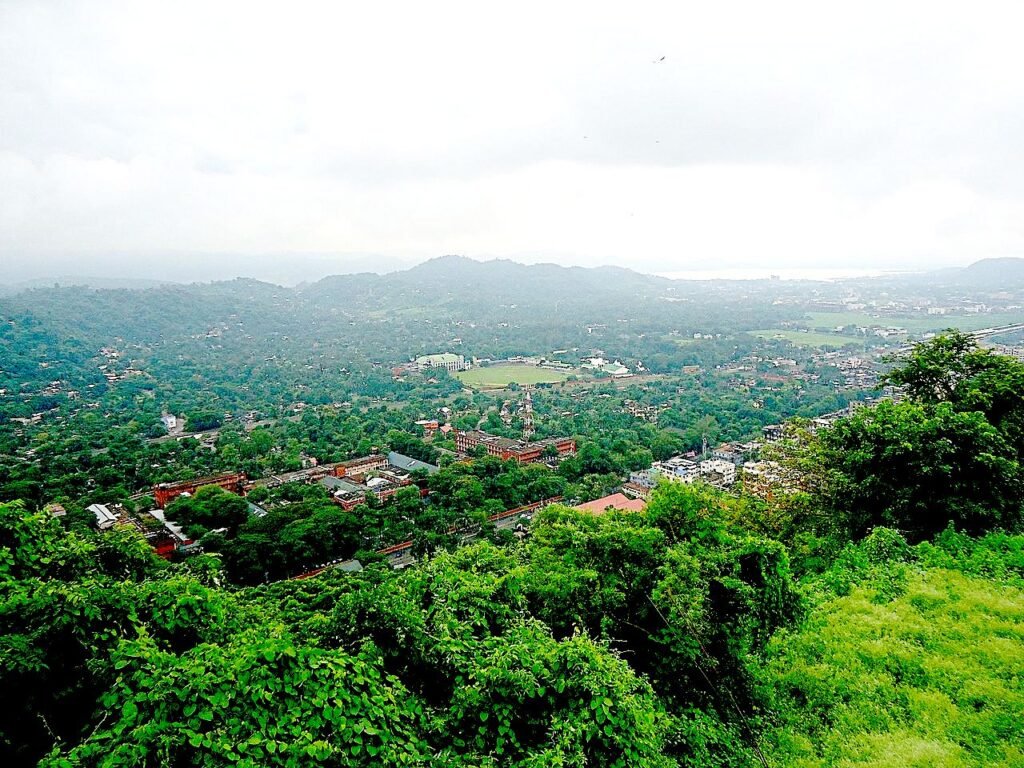
Figure 3: Landscape of Assam in northeastern India, corresponding to the ancient region of Kāmārūpa, one of the sacred Tantric centers frequently mentioned in medieval Tantric literature. Source: Wikimedia Commons
Other locations such as Jālandhara and Pūrṇagiri also appear frequently in lists of Tantric centers. Although the precise locations of some of these sites remain subjects of scholarly debate, many researchers place them in regions corresponding to present-day Punjab, Himachal Pradesh, and the Himalayan foothills. For centuries, these areas have been zones of interaction among diverse communities, including Indo-Aryan populations, Himalayan ethnic groups, and merchants from Central Asia.
What these locations share in common is their proximity to the Himalayan region, an area that holds not only geographical significance but also a distinctive cultural role in Asian history. The Himalayas did not function merely as a barrier separating civilizations; rather, they often served as a cultural corridor through which ideas and traditions could circulate. Mountain passes connecting India with Tibet and Central Asia were used for centuries by merchants, missionaries, and religious practitioners.
Within this context, Tantric traditions may be understood as products of a transregional cultural environment. Regions such as Uḍḍiyāna and Kāmārūpa were not merely geographical locations but symbolic spaces where different religious traditions met and transformed one another. In these frontier zones, Buddhist practitioners may have encountered local cults, shamanic traditions, and various ritual practices, integrating some of these elements into their own systems of practice.
It is also noteworthy that many Tantric texts refer not only to centers within India but also to regions such as Nepal, Tibet, and even Mahācīna (Greater China). These references reflect a broader vision of the Tantric religious world, in which the Himalayan and Central Asian regions are regarded as integral parts of a wider spiritual network. In this sense, Tantra was not merely an Indian phenomenon but a tradition that developed within the interconnected cultural space of the Himalayan world.
From a historical perspective, the geography of Tantric traditions thus suggests that their development cannot be separated from the trade routes and cultural networks of ancient Asia. Frontier regions of the ancient Indian world—where different civilizations encountered one another—often became creative environments in which new religious ideas could emerge. It was within this distinctive geographical and cultural setting that Tantric Buddhism developed into a tradition of far-reaching influence throughout the Buddhist worlds of the Himalayas and Central Asia.
IV. Yoginī and Ḍākinī Traditions in Tantric Buddhism
One of the most striking features of the Tantric world is the prominence of female figures and the practices associated with yoginīs and ḍākinīs. In many Tantric texts of both Buddhism and Hinduism, these figures play an important role within the ritual and symbolic structure of Tantra. The prominence of female figures in these traditions has drawn the attention of many scholars, since for much of the religious history of ancient India philosophical systems and monastic institutions were typically organized around male communities. In Tantra, by contrast, female figures appear not only as objects of reverence but also as central symbols of spiritual power and enlightened wisdom.
In Buddhist Tantric texts, the term ḍākinī is often used to refer to female beings endowed with supernatural power and associated with enlightened wisdom. In later Tibetan traditions, ḍākinīs are frequently understood as manifestations of wisdom (prajñā), complementing the principle of skillful means (upāya), which is often symbolized by male deities. In many Tantric rituals, the union of these two principles—upāya and prajñā—is regarded as a symbolic representation of the completion of the path to enlightenment.
Ḍākinīs appear in a variety of forms within Tantric literature. At times they are described as supernatural beings dwelling in sacred spaces such as charnel grounds or remote mountainous regions. In other contexts, they are portrayed as female practitioners who have attained extraordinary spiritual abilities through Tantric practice. In later Vajrayāna traditions, figures such as Vajrayoginī and Yeshe Tsogyal came to be regarded as important embodiments of Tantric wisdom and as symbols of the capacity of female practitioners to attain enlightenment.
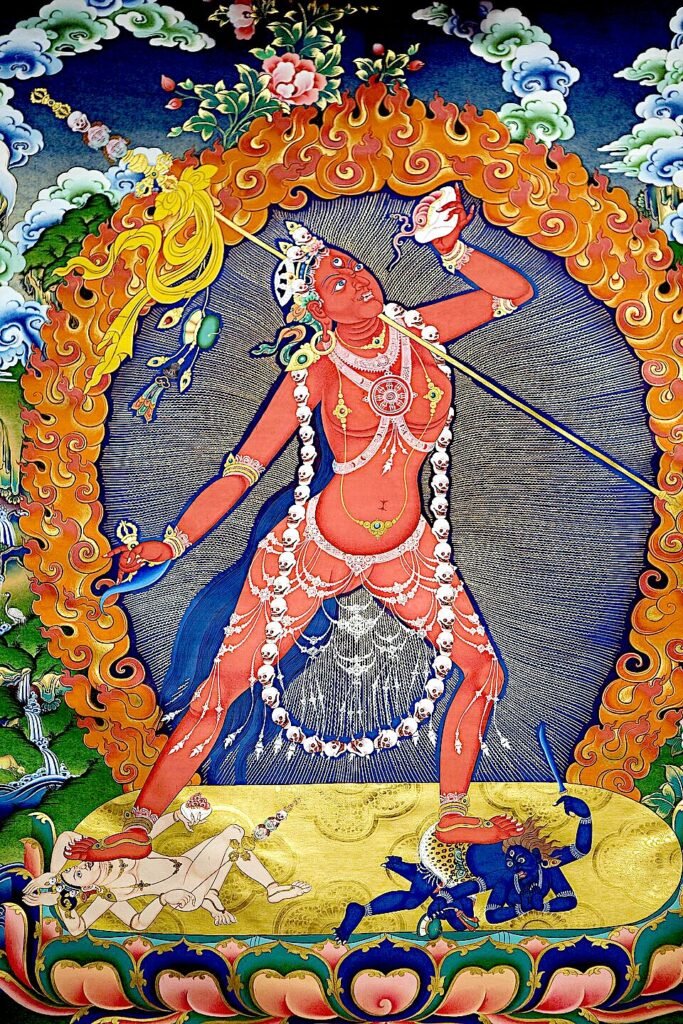
Figure 4: Thangka painting of Vajrayoginī, a prominent yoginī and ḍākinī figure in Vajrayāna Buddhism, symbolizing the transformative wisdom and feminine energy central to Tantric traditions. Source: Wikimedia Commons
Alongside the ḍākinīs, Tantric texts also frequently refer to yoginīs, a term that may denote female practitioners or divine female beings. In certain Tantras of both Buddhist and Hindu traditions, yoginīs are described as groups of mystical goddesses who appear within ritual circles known as cakras or maṇḍalas. These yoginī circles are often regarded as sacred spaces in which Tantric rituals are performed.

Figure 5: Chausath Yogini Temple at Ranipur-Jharial (Odisha, India), a circular Tantric shrine dedicated to the sixty-four Yoginīs, illustrating the ritual spaces associated with Yoginī traditions in medieval Tantra. Source: Wikimedia Commons
In Tantric art and symbolism, yoginīs are often depicted in powerful and sometimes fierce forms. They may hold ritual implements such as the curved ritual knife (kartika), skull cups (kapāla), or other ceremonial objects. While these images may appear striking or unsettling to modern observers, within the Tantric context they carry profound symbolic meaning. Symbols such as skulls or charnel grounds are commonly used to emphasize the impermanent nature of existence and to encourage practitioners to overcome their fear of death.
The prominence of yoginīs and ḍākinīs in Tantra has led some scholars to speculate that these traditions may be connected to goddess cults or shamanic practices of frontier regions of the ancient Indian world. In many parts of the Himalayas and neighboring mountainous areas, local religious traditions often included cults devoted to mountain goddesses, female spirits, or female ritual specialists believed to possess the ability to communicate with the spiritual realm. When Buddhist practitioners encountered such traditions, certain elements may have been incorporated into the symbolic system of Tantra.
Acknowledging the possibility of such cultural interaction, however, does not imply that yoginīs and ḍākinīs are merely borrowed elements from other traditions. In Buddhist Tantric texts, these figures are reinterpreted within the framework of Buddhist philosophy, particularly in light of concepts such as emptiness (śūnyatā) and enlightened wisdom. Ḍākinīs are therefore not simply spirits or goddesses; rather, they are understood as symbolic embodiments of wisdom capable of disrupting the ordinary conceptual structures of the mind.
Another important aspect of yoginī traditions is their emphasis on the immediacy of spiritual experience. In many Tantric texts, yoginīs are described as directly transmitting teachings to practitioners through mystical experiences or visionary encounters. Such narratives reflect a Tantric understanding that enlightened wisdom may manifest not only through scriptures or philosophical treatises but also through direct spiritual experience.
The strong presence of female figures in Tantra may also be understood as reflecting a transformation in the way Buddhist traditions expressed their philosophical principles. While earlier Buddhist traditions often emphasized philosophical analysis and meditative discipline, Tantra employs a rich symbolic system in which philosophical ideas are embodied in divine imagery and complex ritual practices. Within this symbolic framework, yoginīs and ḍākinīs become vivid representations of wisdom, transformative power, and the capacity to transcend the conventional limits of human perception.
From a historical and cultural perspective, the traditions of yoginīs and ḍākinīs demonstrate that Tantric Buddhism is not merely a philosophical system but also a rich ritual and symbolic universe. These figures reflect both the internal creativity of Buddhist traditions and their interaction with the broader cultural environment of the Himalayan world. It was within this space of cultural intersection that the images of yoginīs and ḍākinīs emerged as some of the most distinctive symbols of Tantric Buddhism.
V. Linguistic and Cultural Traces of the Himalayan World
In addition to geographical factors and religious symbolism, another aspect that has attracted the attention of some scholars in the study of the origins of Tantric Buddhism concerns linguistic and cultural traces that may reflect the environment in which these traditions developed. In many Tantric texts, one encounters terms, names, and concepts that do not entirely conform to the familiar vocabulary of classical Sanskrit. This observation has led some researchers to question whether Tantric literature may have emerged within a multilingual environment in which different cultural traditions coexisted and influenced one another.
In the history of the Indian subcontinent, Sanskrit has generally been regarded as the language of established scholarly and religious traditions. Alongside Sanskrit, however, numerous other languages and dialects existed, including those belonging to the Indo-Aryan and Tibeto-Burman language families, as well as various Himalayan linguistic groups. Regions located on the margins of the ancient Indian world—particularly those associated with the Himalayan regions—have long functioned as zones of interaction among diverse linguistic communities.
Some early twentieth-century scholars drew attention to the possibility that certain Tantric terms might reflect influences from Himalayan languages. These hypotheses focused on words appearing in Tantric texts whose Sanskrit etymologies are not entirely clear. In some cases, researchers attempted to compare such terms with words found in languages such as Tibetan, Lepcha, Limbu, and the Kiranti languages of the Himalayan region.
Such comparisons are often speculative and cannot always be demonstrated with certainty. Nevertheless, they suggest an important possibility: Tantric texts may have taken shape within an environment where practitioners and scholars from various regions of Asia gathered and exchanged ideas. In such a setting, it would not be surprising if certain terms or concepts from local languages were incorporated into the vocabulary of Tantric traditions.
Another important factor to consider is the flexibility of Sanskrit within Tantric literature. Unlike the classical Sanskrit of Vedic texts or Brahmanical philosophical works, the language of many Tantras often displays a creative character and occasionally departs from conventional grammatical norms. Tantric authors appear not to have hesitated to coin new terms, combine elements from different linguistic sources, or employ forms of expression that are highly symbolic. This reflects the nature of Tantra as a religious tradition that relies not only on philosophical reasoning but also on the symbolic and ritual power of language.
Within the Tantric context, language is not merely a medium for conveying meaning but is also regarded as a spiritual instrument. Mantras and dhāraṇīs are believed to possess a special power capable of protecting, purifying, and transforming the practitioner’s mind. Many mantras found in Tantric texts do not possess a clear meaning according to conventional grammatical analysis and sometimes contain syllables that cannot be explained within the structure of Sanskrit. This suggests that within Tantra, the significance of language lies not only in semantic meaning but also in the sonic and symbolic power of sacred syllables.
For this reason, linguistic traces in Tantric texts may reflect an environment in which multiple cultural and linguistic traditions coexisted. In major monastic institutions of ancient India, such as Nālandā and Vikramaśīla, scholars and practitioners from many regions of Asia gathered to study and exchange knowledge. These international communities may have created an environment in which religious ideas, ritual practices, and even linguistic elements were shared and reconfigured.
Viewed from this perspective, the linguistic features of Tantric texts are not merely minor details in the history of textual scholarship but also reflect a broader cultural context. They suggest that Tantric Buddhism did not develop solely within the framework of a single linguistic tradition but within a multilingual and multicultural environment. In such a setting, practitioners and scholars from India, the Himalayan regions, and Central Asia may all have contributed to the formation of Tantric traditions.
Therefore, examining linguistic elements in Tantric literature not only helps us better understand the structure of these texts but also opens a wider perspective on the historical environment in which they were produced. These linguistic traces, although sometimes difficult to interpret with certainty, nevertheless provide important clues regarding the cultural and intellectual exchanges that contributed to the formation of Tantric Buddhism in the Himalayan world.
VI. Cultural Exchange and Religious Transformation
The analyses presented in the preceding sections suggest that the formation of Tantric Buddhism cannot be fully understood if it is viewed solely as an internal development within Indian Buddhism. The geographical, symbolic, and linguistic elements examined above indicate that Tantric traditions developed within a broader environment of cultural exchange in which multiple religious and intellectual traditions encountered and influenced one another. In this context, Tantric Buddhism may be understood as one expression of a wider process of transregional religious transformation that unfolded across the Himalayan and Central Asian worlds during the medieval period.
In the history of ancient Asia, the regions situated between the Indian subcontinent, Central Asia, and Tibet were not merely geographical boundaries but also zones of cultural interaction. Trade routes connecting India with regions such as Bactria, Sogdia, and the Tarim Basin created extensive networks of communication through which merchants, scholars, and religious practitioners could travel and exchange ideas. These routes are commonly referred to as the Silk Road, and they played a significant role in the transmission of major Asian religions, including Buddhism, Hinduism, and many other religious traditions.
Within such an environment of exchange, religious traditions rarely developed in complete isolation. Instead, they frequently interacted, borrowed from one another, and reinterpreted elements from different traditions. This was particularly true of Tantric traditions, which emerged during a period when esoteric forms of religious practice were also flourishing in several other religious systems of India. The Tantras of Buddhism and those of the Śaiva and Śākta traditions, for example, share a number of common features, including the use of mantra, maṇḍala, and initiation rituals.
These similarities do not necessarily imply that one tradition simply copied from another. Rather, they reflect a shared religious environment in which different communities were experimenting with new forms of practice. Within this environment, practitioners and scholars may have shared ritual techniques, symbolic forms, and philosophical ideas, subsequently reinterpreting them within the framework of their own traditions.
For Buddhism, this process led to the emergence of Vajrayāna, a form of Buddhism in which ritual practices, symbolic imagery, and visualization techniques were integrated with the philosophical teachings of Mahāyāna. Concepts such as emptiness (śūnyatā) and the Bodhisattva ideal remained central, yet they were expressed through a new symbolic system that included Tantric deities, complex maṇḍalas, and initiation rituals. Within this framework, divine figures are not understood as independent entities but rather as symbolic expressions of the awakened state.
An important aspect of this transformation was the adaptation of Buddhism to different cultural environments. As Tantric Buddhism spread from India into the Himalayan regions and Tibet, it continued to interact with local traditions and underwent further transformations. Elements of Himalayan culture—including local cults, shamanic rituals, and indigenous religious symbols—were incorporated into the practical systems of Vajrayāna. These elements, however, were often reinterpreted within the framework of Buddhist philosophy, particularly in light of concepts such as emptiness and the Bodhisattva path.
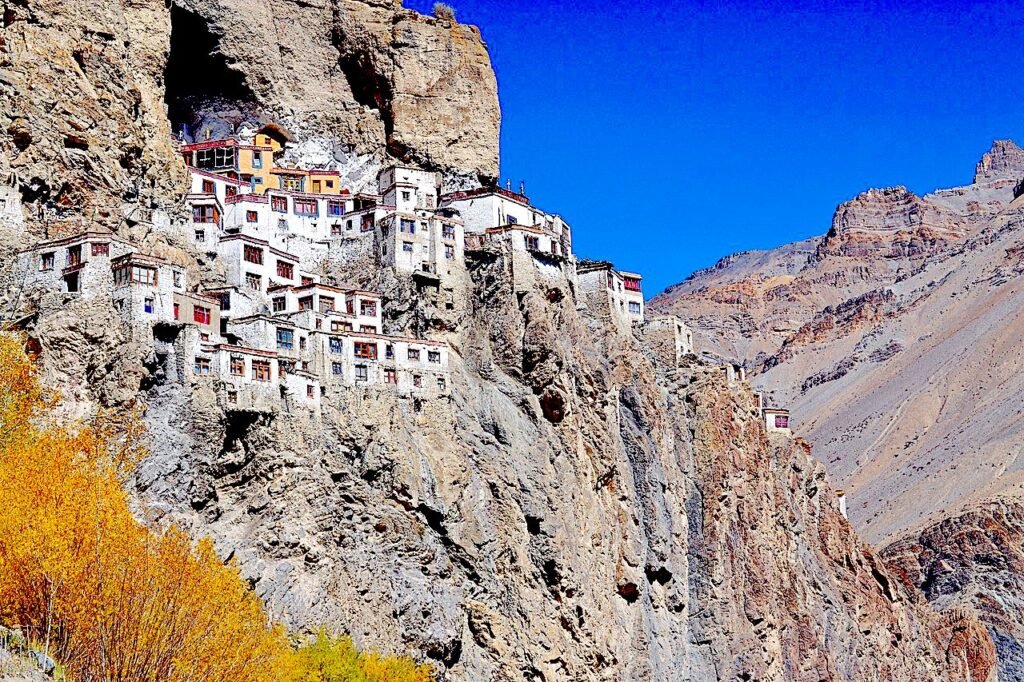
Figure 6: Phuktal Monastery in the Zanskar Valley of Ladakh, a remote Himalayan Buddhist monastery illustrating the spread and transformation of Vajrayāna traditions in the Himalayan world. Source: Wikimedia Commons
This process of interaction and transformation demonstrates that Tantric Buddhism was not a fixed religious system but rather a dynamic tradition capable of adapting to diverse cultural contexts. Such flexibility may help explain why Vajrayāna became the dominant form of Buddhism in many regions of the Himalayan world. By integrating elements from surrounding cultural environments while preserving the fundamental philosophical principles of Buddhism, Tantric traditions created a religious system that was both familiar and innovative for local communities.
From a broader historical perspective, Tantric Buddhism may therefore be viewed as a clear example of how religious traditions develop through interaction between different cultures. In the ancient and medieval worlds, where trade and pilgrimage routes connected many regions of Asia, religious ideas were rarely confined by geographical boundaries. Instead, they moved together with people, adapted to new environments, and transformed in creative ways.
It was within this wider context of cultural exchange that Tantric Buddhism emerged and developed. It reflects not only the creativity of Buddhist practitioners but also the dynamism of the religious world of ancient Asia. Understanding Tantra in this way allows us to see it not merely as a distinctive chapter in the history of Buddhism, but as part of a broader process of religious transformation that took place across the entire Himalayan and Central Asian regions.
VII. Conclusion: Tantric Buddhism as a Transregional Phenomenon
The analyses presented in the preceding sections suggest that Tantric Buddhism cannot be fully understood if it is viewed solely as a phenomenon that emerged purely within the internal development of Indian Buddhism. The evolution of Tantric traditions reflects a complex historical process in which philosophical ideas, ritual practices, and symbolic systems were reconfigured within a broader cultural environment. By examining the historical, geographical, and linguistic sources related to Tantra, it becomes clear that these traditions took shape within a transregional sphere of cultural exchange, particularly within the Himalayan world and its surrounding regions.
First, the historical context of the emergence of the Tantras indicates that they do not represent a radical break from earlier Buddhist traditions but rather a new phase in the development of Buddhism. The Tantras continued to rely on the philosophical foundations of Mahāyāna Buddhism, especially the concepts of emptiness (śūnyatā) and the Bodhisattva ideal. These teachings, however, were expressed through a new ritual and symbolic system that included complex maṇḍalas, initiation ceremonies, and deity visualization practices. The integration of philosophical doctrine with ritual practice produced a distinctive form of Buddhism in which the path to awakening was presented as a comprehensive transformation of both body and mind.
Alongside this philosophical background, geographical factors also played a crucial role in understanding the formation of Tantric Buddhism. The Tantric centers frequently mentioned in the texts—such as Uḍḍiyāna, Kāmārūpa, Jālandhara, and Pūrṇagiri—are all located at the margins of the ancient Indian world. These regions were not only religious sites but also important intersections of trade and pilgrimage routes connecting India with Central Asia and the Himalayan world. In such environments, different religious traditions could meet and influence one another, creating conditions conducive to the emergence of new forms of religious practice.
The symbolic elements of Tantra, particularly the prominence of yoginīs and ḍākinīs, likewise reflect a rich religious environment in which female figures occupy central roles within ritual and mythological systems. These figures may reflect both the internal creativity of Buddhist traditions and their interaction with local cults and religious traditions of the Himalayan regions. Within Tantric Buddhism, figures such as yoginīs and ḍākinīs were reinterpreted as symbols of wisdom and transformative power, illustrating how diverse cultural elements could be integrated into the philosophical framework of Buddhism.
Linguistic traces in Tantric texts also suggest the presence of a multilingual and multicultural environment. The possible connections between certain Tantric terms and Himalayan languages, although still hypothetical, indicate that these traditions may have developed within a context in which communities from various parts of Asia encountered one another and exchanged knowledge. In the major monastic institutions of ancient India, scholars and practitioners from Tibet, Nepal, and Central Asian regions participated in the intellectual life of Buddhist centers. These international environments may have played a significant role in the formation and transmission of Tantric traditions.
Viewed from the broader perspective of the religious history of Asia, Tantric Buddhism can thus be understood as a clear example of how religious traditions evolve through processes of cultural interaction and transformation. Throughout its history, Buddhism repeatedly adapted to new cultural environments as it spread from India to Central Asia, China, Southeast Asia, and the Himalayan regions. Tantra may be regarded as a distinctive expression of this adaptive process, in which Buddhist philosophical ideas were combined with new ritual forms and symbolic systems to produce a rich and creative religious tradition.
Rather than interpreting Tantric Buddhism as a mysterious anomaly or an exception within Buddhist history, it may therefore be more accurate to understand it as part of a broader historical process. In this process, religious ideas traveled across geographical regions, encountered diverse cultural traditions, and were reconfigured in new forms. It was within this context of cultural interaction that Tantric Buddhism developed into a significant tradition of the Buddhist world, particularly in the regions of the Himalayas and Tibet.
Seen in this light, Tantric Buddhism is not merely a chapter in the history of Indian Buddhism but also part of the larger history of religious and cultural exchange across the entire Himalayan and Central Asian regions. Understanding this broader context allows us to see Tantra not simply as a system of esoteric ritual but as an expression of the dynamism and creativity of Buddhist traditions as they interacted with the surrounding cultural world.
Related Studies:
Bibliography
Bagchi, Prabodh Chandra. “On Foreign Elements in the Tantra.” Indian Historical Quarterly 7 (1931): 1–14.
Davidson, Ronald M. Indian Esoteric Buddhism: A Social History of the Tantric Movement. New York: Columbia University Press, 2002.
Gray, David B. The Cakrasamvara Tantra: The Discourse of Śrī Heruka. New York: American Institute of Buddhist Studies, 2007.
Samuel, Geoffrey. The Origins of Yoga and Tantra: Indic Religions to the Thirteenth Century. Cambridge: Cambridge University Press, 2008.
Snellgrove, David. Indo-Tibetan Buddhism: Indian Buddhists and Their Tibetan Successors. Boston: Shambhala, 1987.
Williams, Paul. Mahāyāna Buddhism: The Doctrinal Foundations. 2nd ed. London: Routledge, 2009.
Woodroffe, John (Arthur Avalon). Shakti and Shakta: Essays and Addresses on the Shakta Tantra Shastra. Madras: Ganesh & Co., 1918.
Zimmer, Heinrich. Artistic Form and Yoga in the Sacred Images of India. Princeton: Princeton University Press, 1984.