Buddhist Studies

A collection of studies on Buddhist history, doctrine, practice, and philosophy, examining the tradition’s intellectual, ethical, and cultural significance across time.

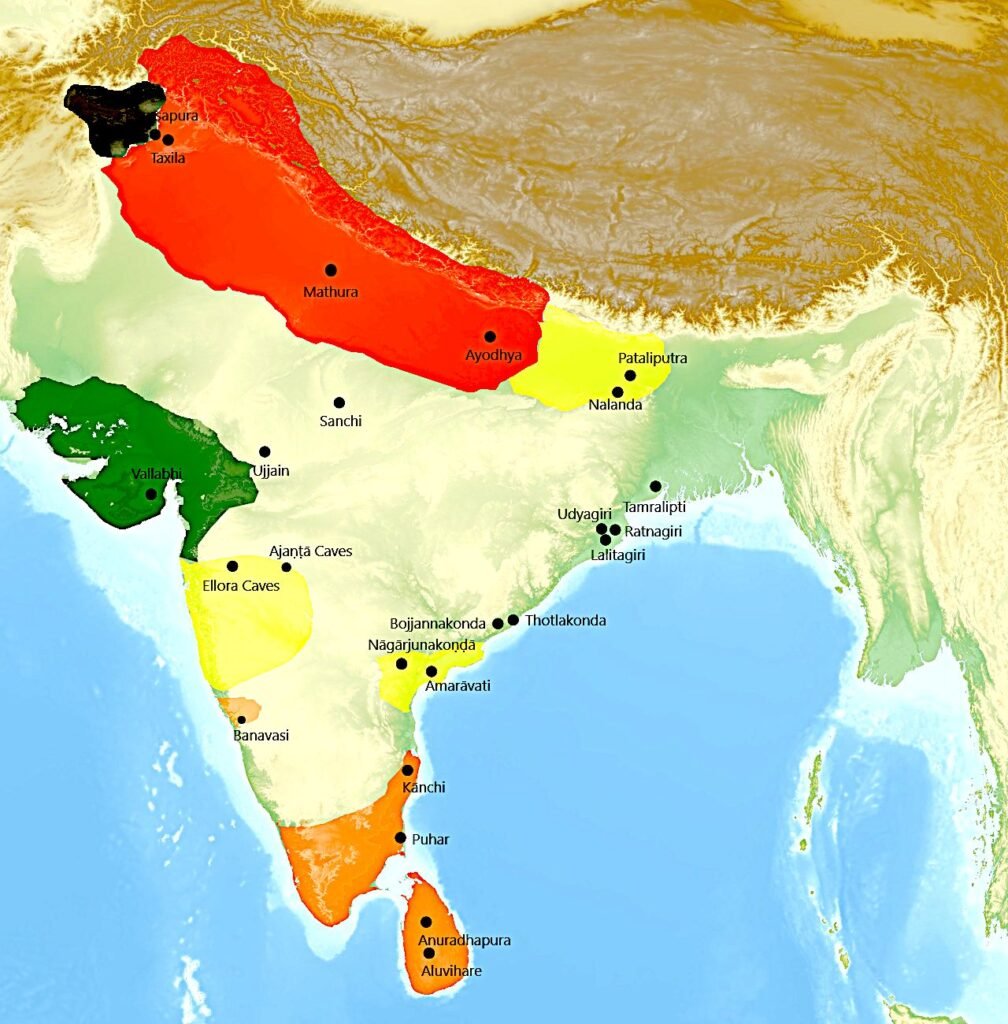
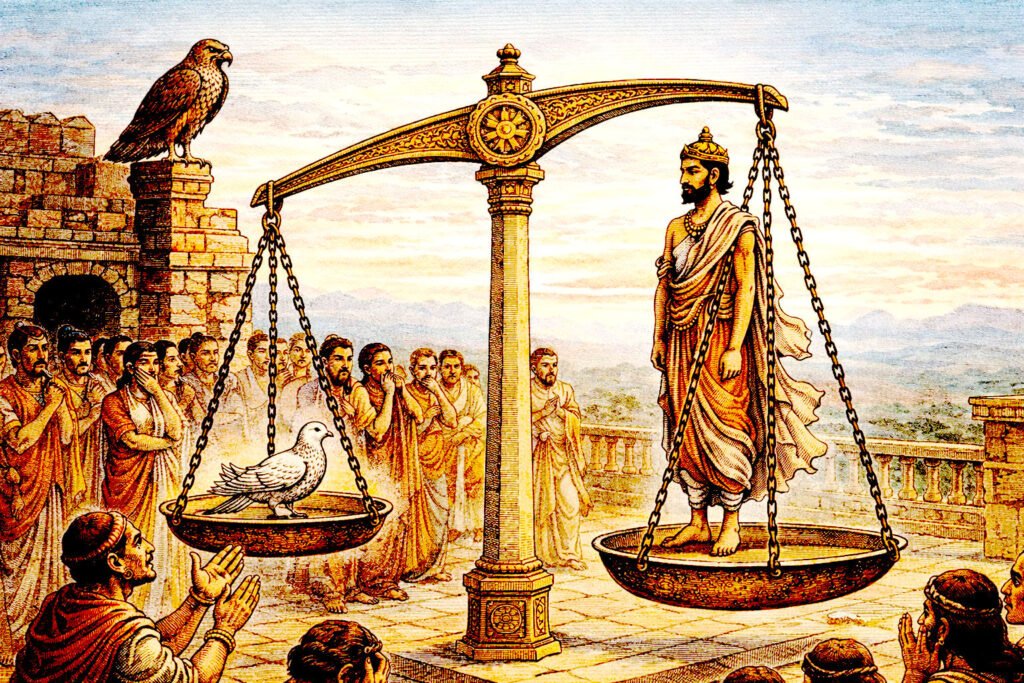
sibi jataka bodhisatta early buddhism

Great Compassion and the Bodhisattva: The Continuity of a Conceptual Structure from Early Buddhism to Mahāyāna Thought

Rather than treating the Bodhisattva as a distinct creation of Mahāyāna, this study proposes that the ideal emerges from a conceptual structure already discernible in early Buddhist texts. Through an analysis of great compassion as an existential commitment illuminated by wisdom, the article shows that Mahāyāna did not invent the Bodhisattva ex nihilo, but universalized and systematized an earlier nucleus. Continuity, not rupture, best explains the development of the Bodhisattva ideal.

Great Compassion and the Bodhisattva: The Continuity of a Conceptual Structure from Early Buddhism to Mahāyāna Thought Read More »

jhana between mind and world

Between Mind and World: The Function of Jhāna in the Nikāyas

This article argues that jhāna in the Nikāyas is neither merely a psychological technique nor a metaphysical union with an ultimate self. Through textual analysis, it shows that jhāna functions as an intermediate mode of experience—restructuring subjectivity while expanding the scope of cognition. In doing so, it illuminates how early Buddhist meditation operates between mind and world without presupposing an immutable self.

Between Mind and World: The Function of Jhāna in the Nikāyas Read More »

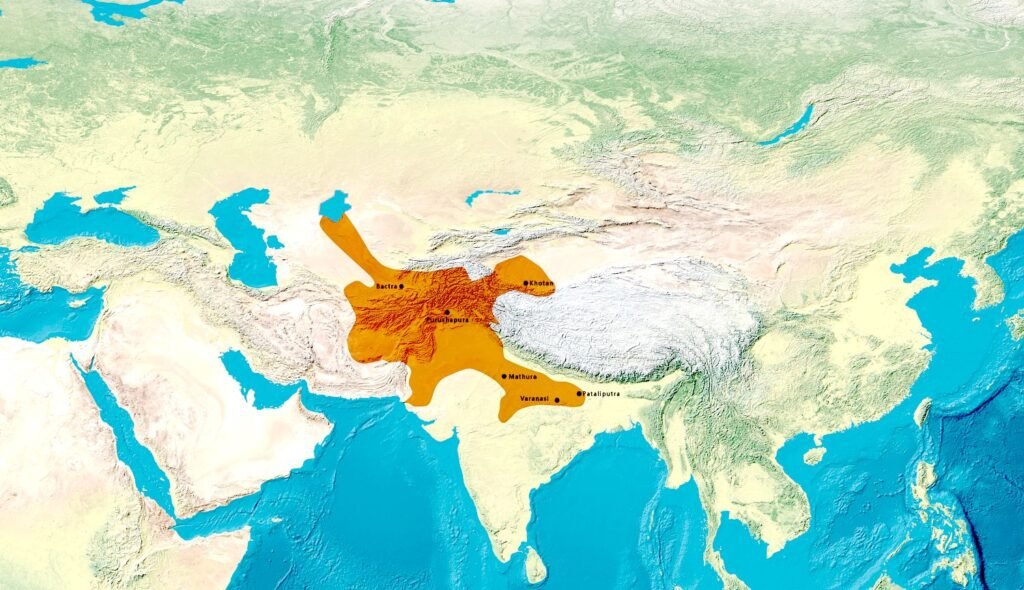
kushan empire territorial extent map

Dating Kaniṣka: Chronology, Imperial Memory, and the Evolution of Kushan Buddhist Historiography

Debates over Kaniṣka’s chronology reveal more than a disagreement over dates. Each proposed era reconfigures the relationship between empire, Sarvāstivāda scholasticism, and doctrinal consolidation. This study examines how shifts from textual to archaeological authority transformed both the proposed chronology and the structure of Buddhist historiography.

Dating Kaniṣka: Chronology, Imperial Memory, and the Evolution of Kushan Buddhist Historiography Read More »

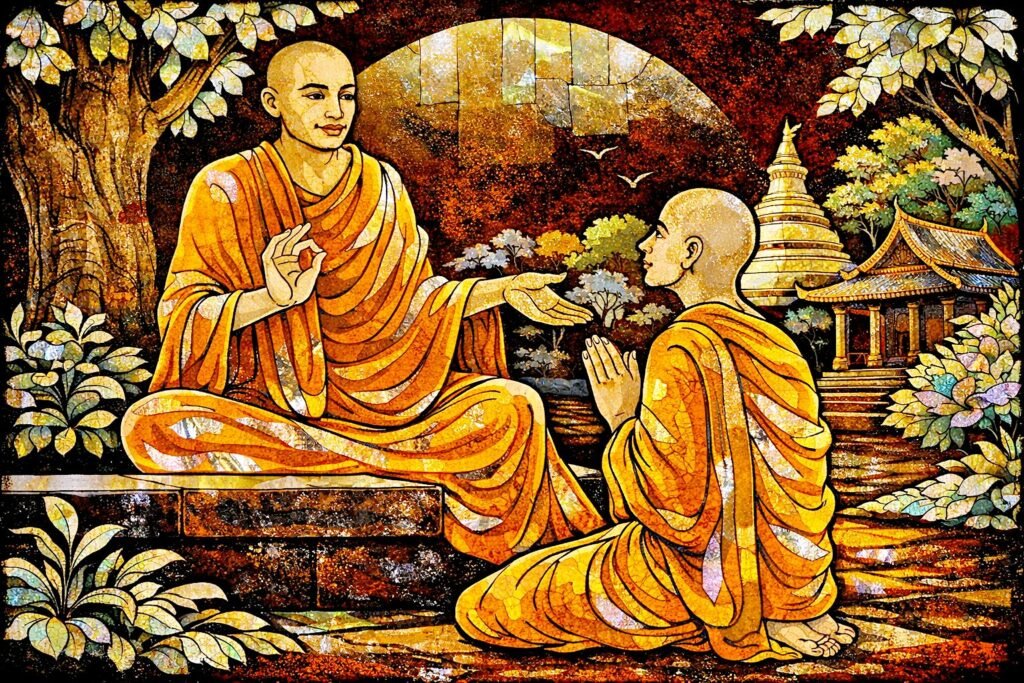
buddhist meditation kalyanamitta and disciple under bodhi tree

Personality and Meditation Objects: A Classical Psychological Structure in the Visuddhimagga

This article reexamines the six carita in the Visuddhimagga as a classical model of personality oriented toward liberation. Rather than fixed identity types, the carita function as conditioned patterns of reactivity paired with specific meditation subjects through a deliberate logic of matching. The system thus operates as a form of applied pre-modern psychology. Yet its ultimate aim is not to refine personality, but to weaken identification with it—revealing personality as the starting point of a process of transcendence.

Personality and Meditation Objects: A Classical Psychological Structure in the Visuddhimagga Read More »

arahant four fruits nikaya structure

The One Way and the Four Fruits: Reconsidering the Structure of Liberation in Early Pāli Buddhism

This article reexamines the Four Noble Fruits in the Nikāyas, arguing that they are not post-mortem destinations within a stratified cosmology, but successive degrees in the dismantling of the conditions for rebirth. By foregrounding the eradication of fetters (saṃyojana) as the decisive criterion, it shows that cosmological language functions as the expression of transformed mental structure rather than as an independent spatial taxonomy. The Four Noble Fruits thus emerge as a dynamic of cessation within a single Way—an internally coherent process grounded in dependent origination rather than in metaphysical positioning.

The One Way and the Four Fruits: Reconsidering the Structure of Liberation in Early Pāli Buddhism Read More »

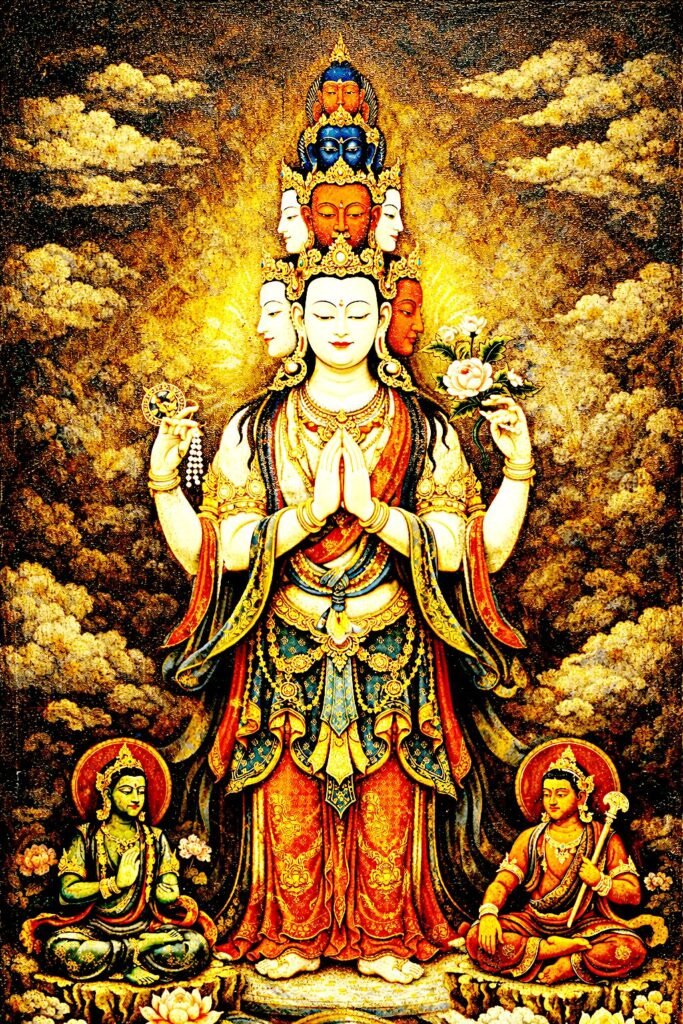
ekadasamukha avalokitesvara gilgit pre tantric phase

Avalokiteśvara in the Gilgit Manuscripts: Evidence of a Pre-Tantric Phase in Sixth-Century Indian Mahāyāna

Often described as a radical rupture, Buddhist Tantra may instead represent a gradual transformation within Mahāyāna. The sixth-century Gilgit manuscripts—particularly the Ekādaśamukha-dhāraṇī and the Hṛdaya-vidyā—reveal mantra structures and ritual mechanisms already taking shape. Rather than sudden innovation, Tantra emerges here as the systematization of an evolving devotional and sonic practice.

Avalokiteśvara in the Gilgit Manuscripts: Evidence of a Pre-Tantric Phase in Sixth-Century Indian Mahāyāna Read More »

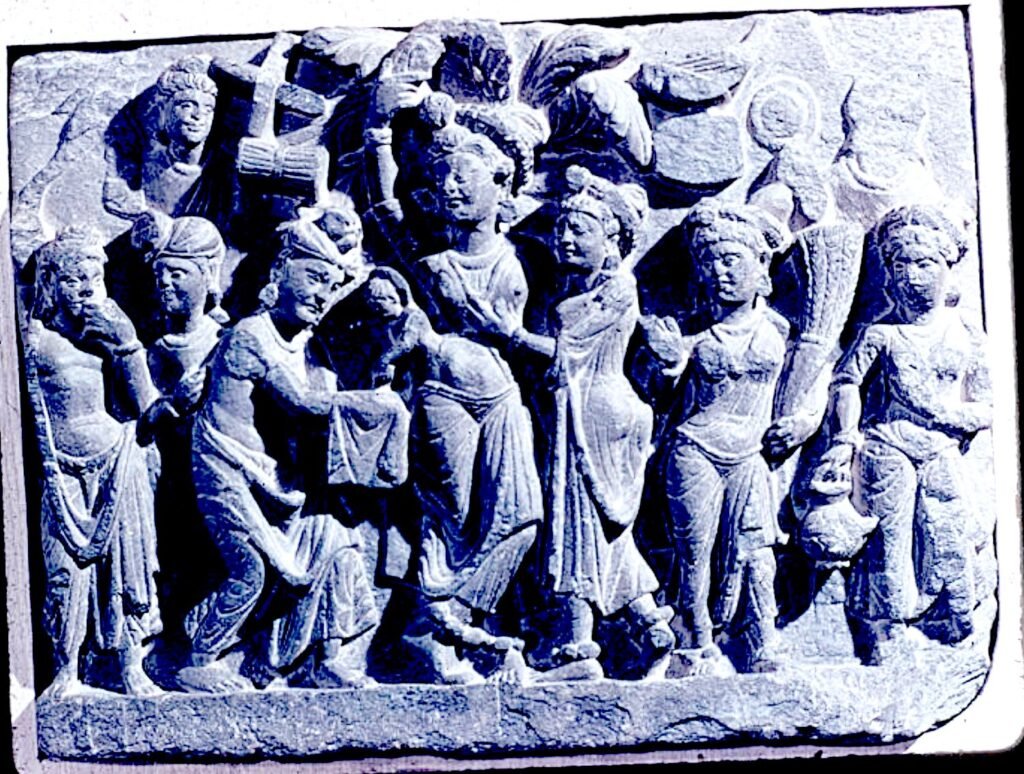
gandhara buddha nativity relief kushan period

From Gaja-Lakṣmī to Māyādevī: The Reconfiguration of the Buddha’s Nativity Iconography in Early Indian Buddhist Art

Is the iconography of the Buddha’s nativity a borrowing from the Gaja-Lakṣmī motif, or a distinct Buddhist invention? This essay moves beyond that binary. Examining Bharhut–Sanchi, Amarāvatī, and Gandhāra, it argues that early Buddhist art operated within a shared symbolic ecology in which visual forms could remain continuous while their theological meaning was reoriented. The nativity scene thus marks not a simple transfer of motifs, but the emergence of a new visual theology within an inherited symbolic world.

From Gaja-Lakṣmī to Māyādevī: The Reconfiguration of the Buddha’s Nativity Iconography in Early Indian Buddhist Art Read More »

sarvastivada geographical distribution map 7th century

Sarvāstivāda: The Forgotten Philosophical School of Early Buddhism

Once among the most powerful and intellectually rigorous schools of early Indian Buddhism, the Sarvāstivāda tradition shaped vast monastic networks across Kashmir, Gandhāra, and the Silk Road frontier. Yet today it remains largely absent from popular memory, overshadowed by the familiar narratives of Theravāda and Mahāyāna. This essay revisits Sarvāstivāda not as a marginal sect, but as a major scholastic movement that transformed Buddhism into a systematic philosophical enterprise—developing sophisticated analyses of time, causality, and the ontology of dharmas. By tracing its historical rise, doctrinal innovations, and enduring legacy, the study restores a forgotten chapter of Buddhist intellectual history and reveals a tradition in which Buddhism became not only a path of practice, but a discipline of rigorous thought.

Sarvāstivāda: The Forgotten Philosophical School of Early Buddhism Read More »

amluk dara stupa gandhara

Buddhism among the Indo-Greek Rulers: Religion, Power, and Cultural Exchange

This study reconsiders the historical relationship between Buddhism and political authority in the Indo-Greek kingdoms of northwestern India. Challenging the modern assumption that Buddhism functioned primarily as an inward or apolitical tradition, the essay argues that the Dharma operated as an active social and ethical force embedded within structures of power. Drawing on archaeological evidence from Gandhāran and Mathuran art, the philosophical dialogues of the Milindapañha, and patterns of royal patronage inherited from Aśoka, the article demonstrates how Buddhism provided moral legitimacy, cultural cohesion, and intellectual frameworks for governance. Rather than standing apart from the state, Buddhism functioned as a form of non-coercive influence—what might be described as an ancient “soft power”—shaping both political practice and collective life across the Indo-Greek world.

Buddhism among the Indo-Greek Rulers: Religion, Power, and Cultural Exchange Read More »

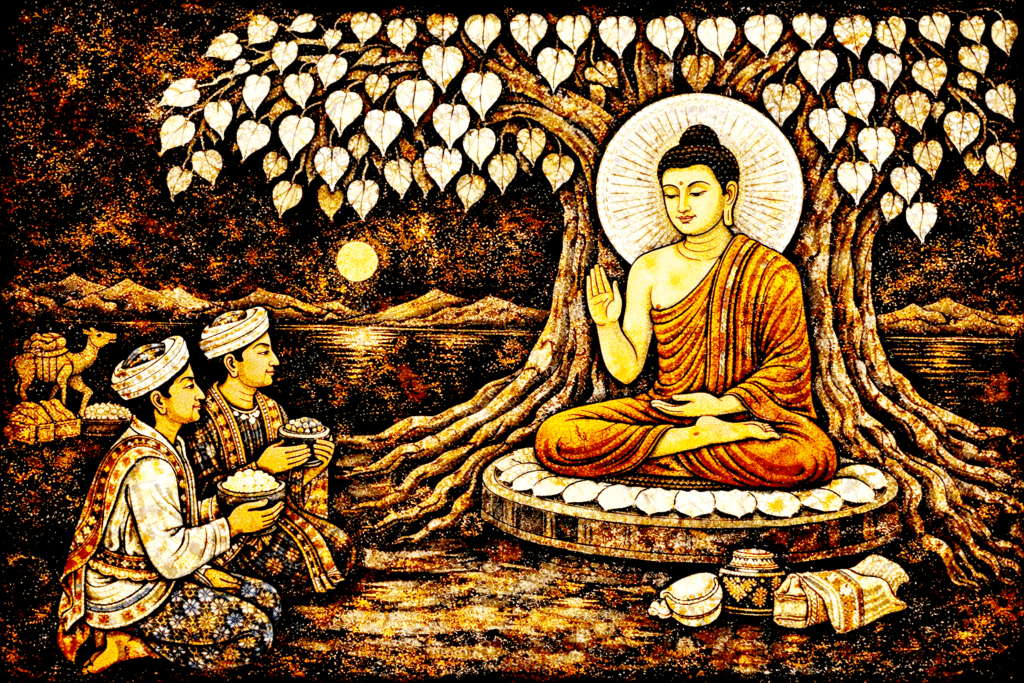
buddha first lay disciples tapussa bhallika

Buddhism as an Engaged Tradition: From Its Early Formation to Modernity

Challenging the view that “Engaged Buddhism” is a modern innovation, this study argues that engagement has been a structural feature of Buddhism from its inception. From early lay encounters and Nikāya ethics to trade networks and Mahāyāna doctrine, the Dharma has consistently operated within social life rather than apart from it.

Buddhism as an Engaged Tradition: From Its Early Formation to Modernity Read More »